
- All
- Product Name
- Product Keyword
- Product Model
- Product Summary
- Product Description
- Multi Field Search

Specialized in PE, PVC, TPE, TPU and Low Smoke Zero Halogen (LSZH) wire and cable compound and materials.
In high-rise buildings, subway tunnels, new energy power stations and industrial complex scenarios, the fire safety of wires and cables is directly related to life and property and system reliability.
YINSU Flame Retardant Company provides customized flame retardant solutions for global customers, covering PE (polyethylene), PVC (polyvinyl chloride), TPE (thermoplastic elastomer), TPU (thermoplastic polyurethane) and LSZH (low smoke and halogen free) wire and cable systems to meet all safety requirements, ranging from UL94 V-0 flame retardant certification to EN 45545 fire protection for rail transportation and IEC 60754 low smoke and halogen free toxicity. All-round safety requirements.
Material Common Use Typical FR Type YINSU Flame Retardant Item No.
PE HDPE, LDPE, LLDPE, Red phosphorus, halogen free FR, PRP-950X, PE-XT-20, YS-F22B, MCA-B
Cross-linked PE cables, Bromine antimony masterbatch MDH, ATH
Plastic insulated cables.
PVC PVC &Plastic insulated power cables, T3 / ATO alternatives T3, T30
Aluminum stranded wires,
Prefabricated branch cables.
TPE Insulated wires, flexible cables Organic phosphorus YS-F22B, YS-9003
Shielded insulated cables
TPU Special purpose cables Organic phosphorus YS-F22B, YS-9003
Power cables for frequency converters.
Others Welcome to consult more details.
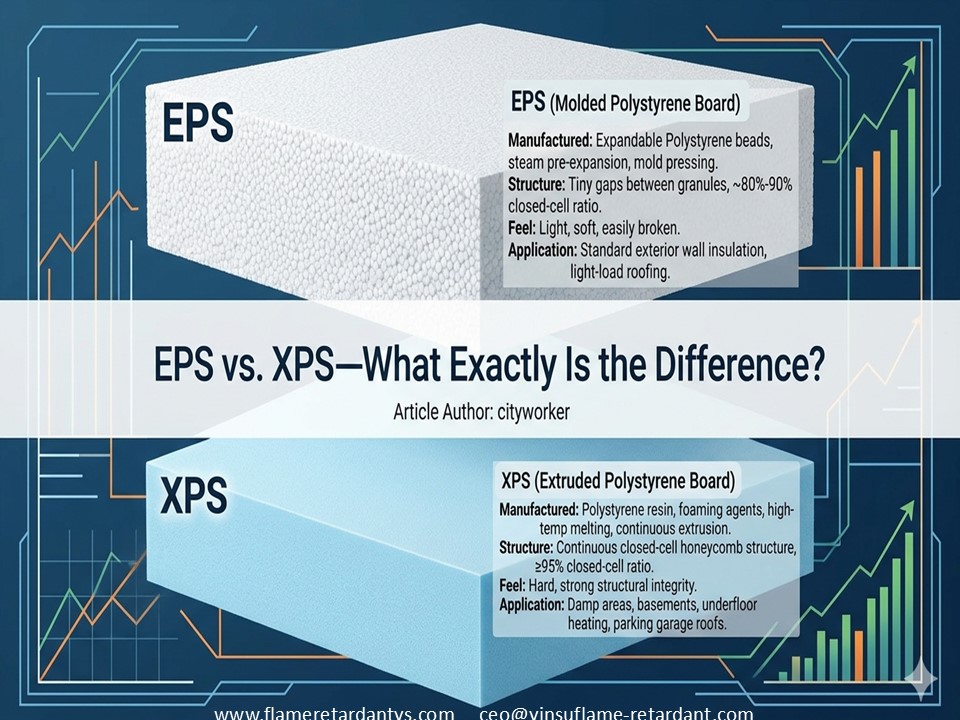

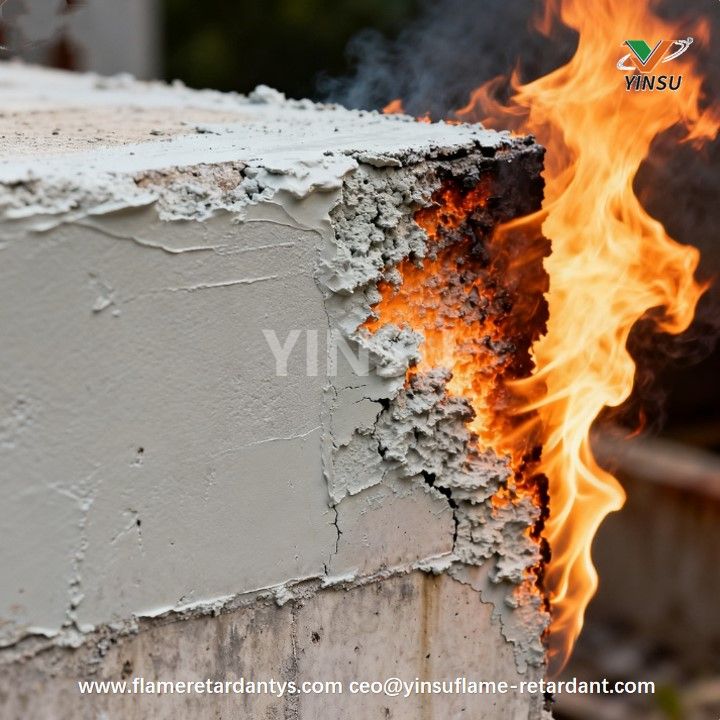


Discover the critical engineering and cost differences between EPS and XPS insulation boards to ensure correct material specification on your next building construction project. By implementing advanced Halogen-free Flame Retardancy and modern YINSU Flame Retardancy technologies, polymer manufacturers can easily upgrade both organic materials to strict Class B1 safety ratings without compromising core thermal or compressive performance.
New Focus in Battery Pack Flame Retardancy: Comparing aerogel, mica, and foamed ceramic insulation solutions, revealing how to synergize with halogen-free flame retardants to meet new energy vehicle flame retardancy standards – achieving no propagation ≥5 minutes after single-cell thermal runaway, easily complying with GB 38031 and EU ECE R100 battery pack flame retardancy regulations
Intumescent fireproof coatings are suitable for locations prioritizing aesthetics and short-term high-efficiency thermal insulation, while non-intumescent coatings are better suited for harsh environments and applications requiring long-term durability.
This article details the primary methods and technologies for enhancing the flame retardancy of rigid polyurethane foam insulation materials, including additive and reactive flame retardants. It covers various flame retardant systems and their effects, highlighting the significance of improving flame retardancy in rigid polyurethane foam insulation materials.
This article delves into the multifaceted applications of foam materials in the new energy vehicle sector, including power battery heat dissipation and protection, NVH (Noise, Vibration, and Harshness) performance enhancement, and lightweight vehicle design. It highlights how foam materials, with their lightweight, flame-retardant, sound-absorbing, and shock-absorbing properties, are driving the development of new energy vehicles.
