- All
- Product Name
- Product Keyword
- Product Model
- Product Summary
- Product Description
- Multi Field Search

How Can PET Blended Spinning Modification Balance Flame Retardancy and Spinnability? YinSu Flame Retardancy: An analysis of the technical background of blended spinning, the logic behind selecting flame-retardant masterbatches, the phosphorus-silicon synergistic system, as well as the root causes and solutions for fiber breakage, nozzle clogging, and reduced melt stability—providing a systematic reference for the functional modification of PET fibers, from formulation to process.
READ MORE
PET Flame-Retardant Filament Spinning: Filament Breakage, Nozzle Clogging, and Decreased Tensile Strength? This article analyzes the core elements of flame-retardant masterbatch formulation design—Yiinsu flame retardant, selection of halogen-free and phosphorus-based flame retardants, synergist matching, and dispersion and antioxidant systems—and provides a formulation framework that balances spinnability and flame retardancy in PET spinning.
READ MORE
Flame-retardant PP is rapidly replacing traditional flame-retardant HIPS and ABS in the home appliance and electronics sectors thanks to its lightweight properties (20% weight reduction) and cost advantages (37% cost reduction). Compared to HIPS/ABS, which suffer from relatively high prices and mediocre resistance to yellowing and aging, flame-retardant PP has emerged as the preferred alternative due to its low cost, lightweight properties, and excellent resistance to aging. Yinsu Flame Retardants offers bromine-antimony and phosphorus-nitrogen-based flame retardant solutions to meet various environmental and cost requirements.
READ MORE
A Comprehensive Analysis of PVC Flame Retardant Types, Synergistic Mechanisms, and the UL 94 Flame Retardancy Rating Standard. Due to the presence of plasticizers, the LOI of flexible PVC decreases significantly; therefore, highly effective flame retardancy must be achieved through synergistic blending of chlorinated paraffin, red phosphorus, antimony trioxide, and other compounds. This article provides a detailed explanation of the mechanisms of action for halogen-based, phosphorus-based, nitrogen-based, and inorganic flame retardants, covering classic case studies in applications such as PVC cable compounds, pipes, and profiles, and serves as a technical reference for formulation engineers engaged in PVC flame retardant modification.
READ MORE
PVC cable compounds still account for 38.7% of the global market (approximately $7.07 billion), while LSZH materials are 30–50% more expensive and require equipment upgrades. GB/T 19666 specifies that low-smoke, halogen-free cables must have a smoke density and light transmittance of ≥60%, a pH of ≥4.3, and a conductivity of ≤10 µs/mm. For requirements related to smoke density and corrosivity, upgrading to flame-retardant PVC (replacing antimony trioxide with red phosphorus, resulting in a cost increase of only 8–12%) is a more rational choice.
READ MORE
Yinsu flame-retardant, ceramicized ablation-resistant agents YS-TCG5 and YS-TCG6 are specifically designed for high-temperature vulcanized silicone rubber and liquid silicone rubber systems. Upon exposure to fire, they rapidly form a dense ceramic layer that withstands ablation from flames exceeding 1,000°C for 30 minutes without burning through. They are widely used in fire-resistant cables, new energy battery protection, and architectural fire-resistant seals, among other applications. These products comply with RoHS and REACH environmental requirements and contribute to the advancement of high-end fire-resistant materials.
READ MORE
The manufacturing process for ceramicized silicone rubber cables encompasses three core stages: vulcanization, extrusion, and curing. Temperature control, mold selection, and curing parameters at each stage directly impact the fire resistance and quality consistency of the finished product. This article systematically outlines the key process considerations and practical parameters for the production of ceramicized silicone rubber cables, providing cable engineers with a practical process guide to help avoid common issues such as rough extrusion surfaces and air bubbles.
READ MORE
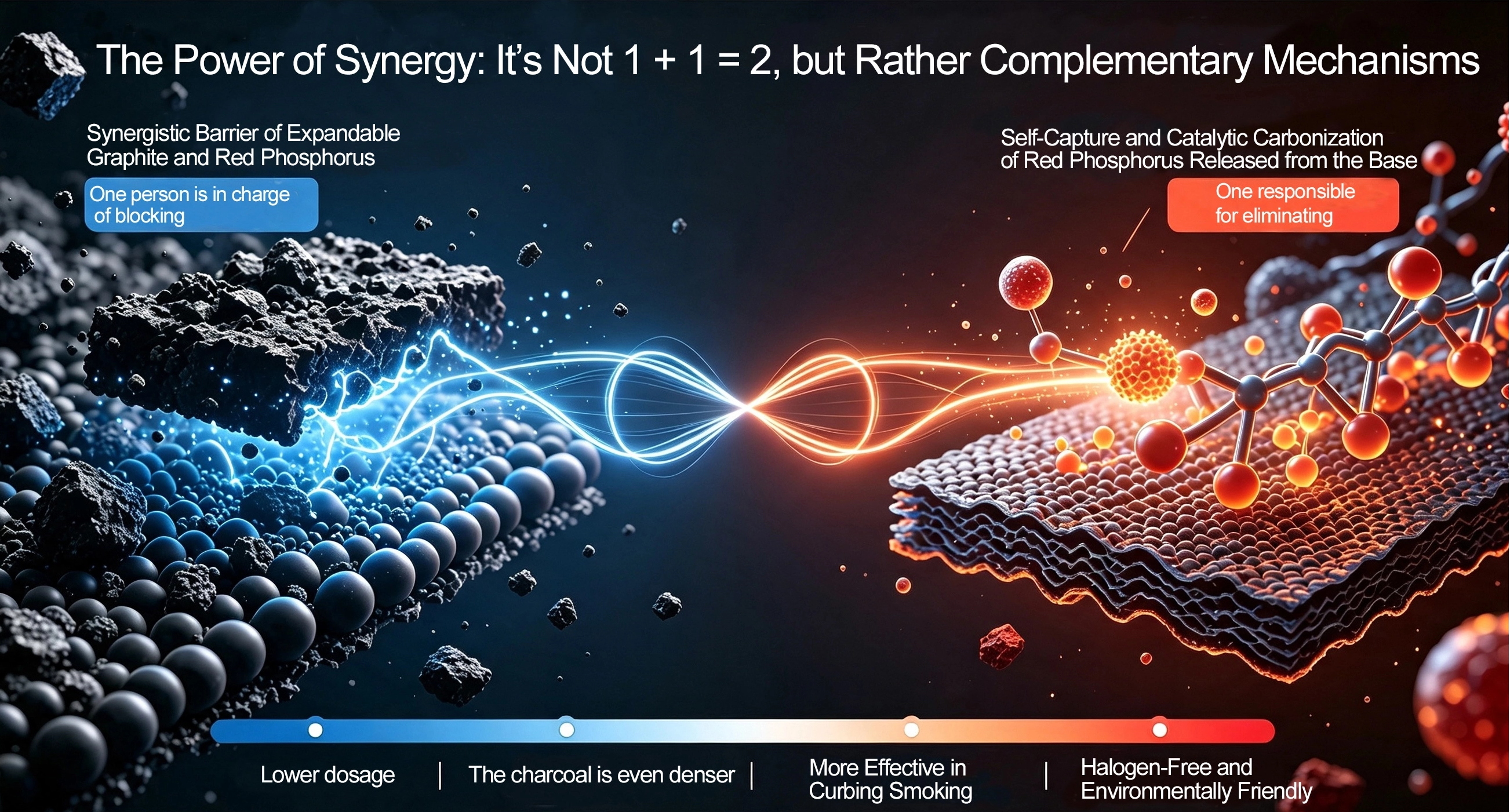
When the physical barrier provided by expandable graphite meets the chemical flame retardancy of red phosphorus, rubber flame retardancy finally breaks free from its “reliance on halogens” and moves toward “high-efficiency synergy.”
READ MORE