
- All
- Product Name
- Product Keyword
- Product Model
- Product Summary
- Product Description
- Multi Field Search

Specialized in PE, PVC, TPE, TPU and Low Smoke Zero Halogen (LSZH) wire and cable compound and materials.
In high-rise buildings, subway tunnels, new energy power stations and industrial complex scenarios, the fire safety of wires and cables is directly related to life and property and system reliability.
YINSU Flame Retardant Company provides customized flame retardant solutions for global customers, covering PE (polyethylene), PVC (polyvinyl chloride), TPE (thermoplastic elastomer), TPU (thermoplastic polyurethane) and LSZH (low smoke and halogen free) wire and cable systems to meet all safety requirements, ranging from UL94 V-0 flame retardant certification to EN 45545 fire protection for rail transportation and IEC 60754 low smoke and halogen free toxicity. All-round safety requirements.
Material Common Use Typical FR Type YINSU Flame Retardant Item No.
PE HDPE, LDPE, LLDPE, Red phosphorus, halogen free FR, PRP-950X, PE-XT-20, B-HFFR, MCA-B, WADP-10
Cross-linked PE cables, Bromine antimony masterbatch FR-ML-01, K100
Plastic insulated cables.
PVC PVC &Plastic insulated power cables, ATO alternatives T3, T30, FRP-950X, K100, ZHS, ZS, ZSB-A
Aluminum stranded wires, Zinc stannate
Prefabricated branch cables.
TPE Insulated wires, flexible cables Organic phosphorus MCA-B, WADP-10, FRP-950X, 95-MC
Shielded insulated cables
TPU Special purpose cables Organic phosphorus MCA-B, WADP-10, FRP-950X, 95-MC
Power cables for frequency converters.
Others Welcome to consult more details.


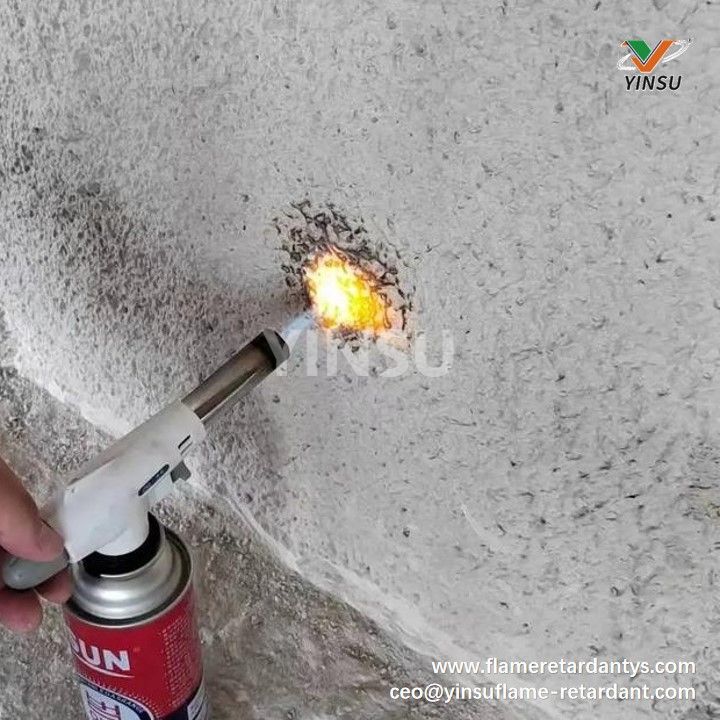
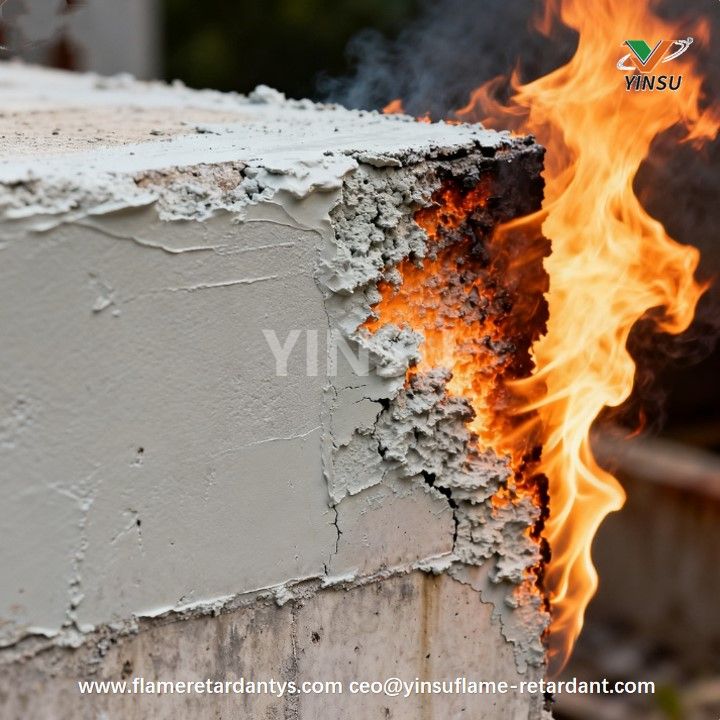
Flame-retardant polyurethane coatings face three core challenges: water-based vs. solvent-based system selection, adhesion degradation, and pH sensitivity. This article analyzes the flame-retardant difficulties and solutions for different systems, and provides specific, actionable recommendations for improving adhesion, controlling pH, and selecting flame retardants. YinSu Flame Retardant offers compounded flame retardants such as red phosphorus paste, ready to use out of the can—no need to mix and match yourself—helping formulation engineers quickly solve flame-retardant application challenges.
Intumescent coatings form an insulating foam layer in fire, effectively delaying temperature rise in steel structures to buy critical escape time. Yinsu's APP 201 offers this superior protection with greater cost-effectiveness.
Intumescent fireproof coatings are suitable for locations prioritizing aesthetics and short-term high-efficiency thermal insulation, while non-intumescent coatings are better suited for harsh environments and applications requiring long-term durability.
The core of ensuring the effectiveness of fireproof coatings lies in selecting the right type for the specific application scenario and strictly adhering to standardized construction processes.
