
- All
- Product Name
- Product Keyword
- Product Model
- Product Summary
- Product Description
- Multi Field Search

Specialized in PE, PVC, TPE, TPU and Low Smoke Zero Halogen (LSZH) wire and cable compound and materials.
In high-rise buildings, subway tunnels, new energy power stations and industrial complex scenarios, the fire safety of wires and cables is directly related to life and property and system reliability.
YINSU Flame Retardant Company provides customized flame retardant solutions for global customers, covering PE (polyethylene), PVC (polyvinyl chloride), TPE (thermoplastic elastomer), TPU (thermoplastic polyurethane) and LSZH (low smoke and halogen free) wire and cable systems to meet all safety requirements, ranging from UL94 V-0 flame retardant certification to EN 45545 fire protection for rail transportation and IEC 60754 low smoke and halogen free toxicity. All-round safety requirements.
Material Common Use Typical FR Type YINSU Flame Retardant Item No.
PE HDPE, LDPE, LLDPE, Red phosphorus, halogen free FR, PRP-950X, PE-XT-20, B-HFFR, MCA-B, WADP-10
Cross-linked PE cables, Bromine antimony masterbatch FR-ML-01, K100
Plastic insulated cables.
PVC PVC &Plastic insulated power cables, ATO alternatives T3, T30, FRP-950X, K100, ZHS, ZS, ZSB-A
Aluminum stranded wires, Zinc stannate
Prefabricated branch cables.
TPE Insulated wires, flexible cables Organic phosphorus MCA-B, WADP-10, FRP-950X, 95-MC
Shielded insulated cables
TPU Special purpose cables Organic phosphorus MCA-B, WADP-10, FRP-950X, 95-MC
Power cables for frequency converters.
Others Welcome to consult more details.




Flame retardancy in adhesives is often compromised by white spots caused by uneven dispersion of flame retardants, or by an acidic pH that affects bond strength. The silver-plastic flame retardant WADP-10 has been specially modified to offer excellent dispersion and a near-neutral pH; it does not interfere with curing, does not corrode substrates, and provides stable peel strength. MCA-B is suitable for nylon and oil-based adhesive systems, meeting the dual requirements of V-0 flame retardancy and bonding performance.
FPC, FFC, and electronic potting compounds—uneven flame retardancy in ultra-thin coatings, component contamination, and failure due to high temperatures during reflow soldering are the three major challenges in flame retardancy for electronic adhesives. Yinsu’s YS-F22B ultra-fine halogen-free flame retardant (comparable to Clariant OP930), with a D95 particle size of ≤10 μm, is hydrolysis-resistant, non-migrating, and does not contaminate components. It achieves UL94 V-0 compliance at low loading levels and is suitable for high-end electronic adhesive applications such as FPCs, FFCs, electronic potting compounds, and label adhesives.
Flame Retardancy Achieved, but Performance Compromised—The Number One Challenge in Epoxy FormulationsPassed the Flame Retardancy Test, but Performance Crashed—The Number One Challenge in Epoxy FormulationAnyone who formulates epoxy knows that the biggest fear in flame-retardant modification isn’t th
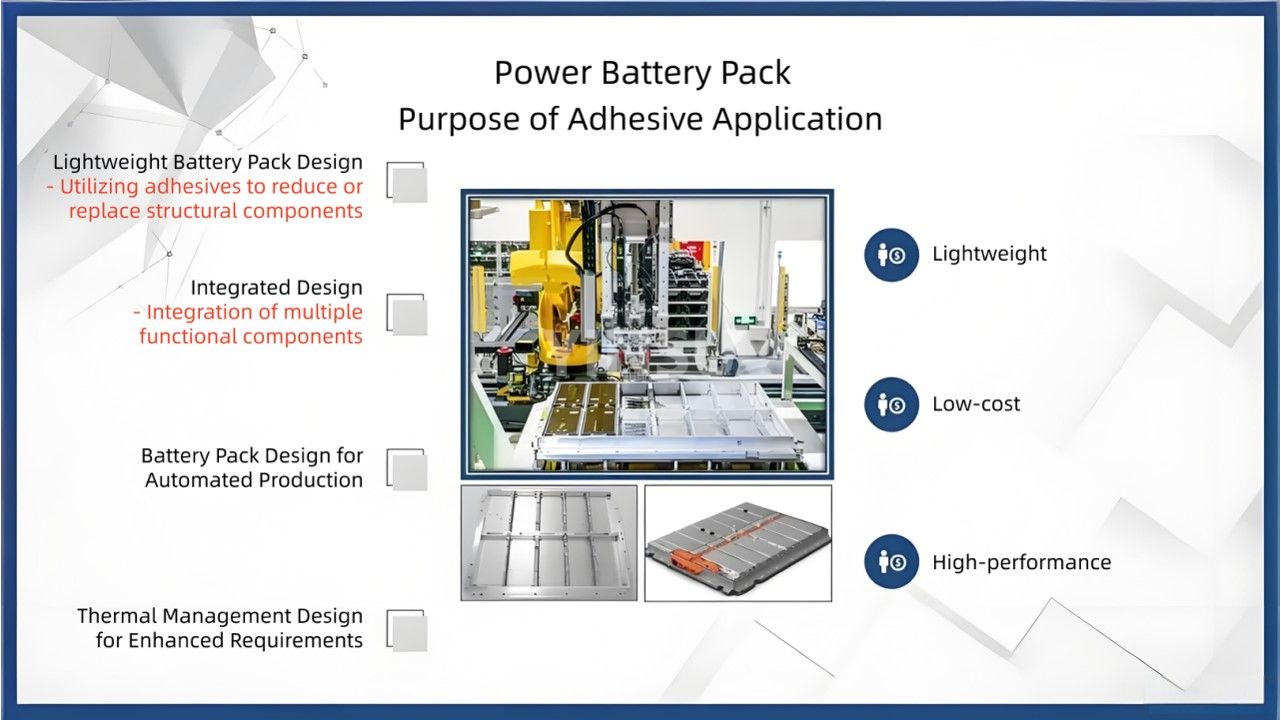
This report reveals how adhesives and flame retardants work together in new energy vehicle battery packs to block thermal runaway within 5 minutes, truly elevating the fire safety of electric vehicles.
Explore the key differences between silicone, epoxy, and polyurethane flame-retardant encapsulation adhesives. Discover their unique advantages, typical applications, and potential drawbacks. Plus, get an overview of Yinsu's innovative MCA-B and ADP flame-retardant solutions.
Join YINSU at the 5th Greater Bay Area International Adhesives and Sealants Exhibition (May 15-17) in Guangzhou, booth C32, D district hall 19.2, for our innovative halogen-free flame retardant tech.
