
- All
- Product Name
- Product Keyword
- Product Model
- Product Summary
- Product Description
- Multi Field Search

Views: 28 Author: SANDY XU Publish Time: 2026-06-01 Origin: www.flameretardantys.com


A Comparative Review of Mainstream Flame-Retardant Insulation Boards: Polyurethane, EPS/XPS, and Phenolic Boards—Whose Strength Is Also Whose Weakness?
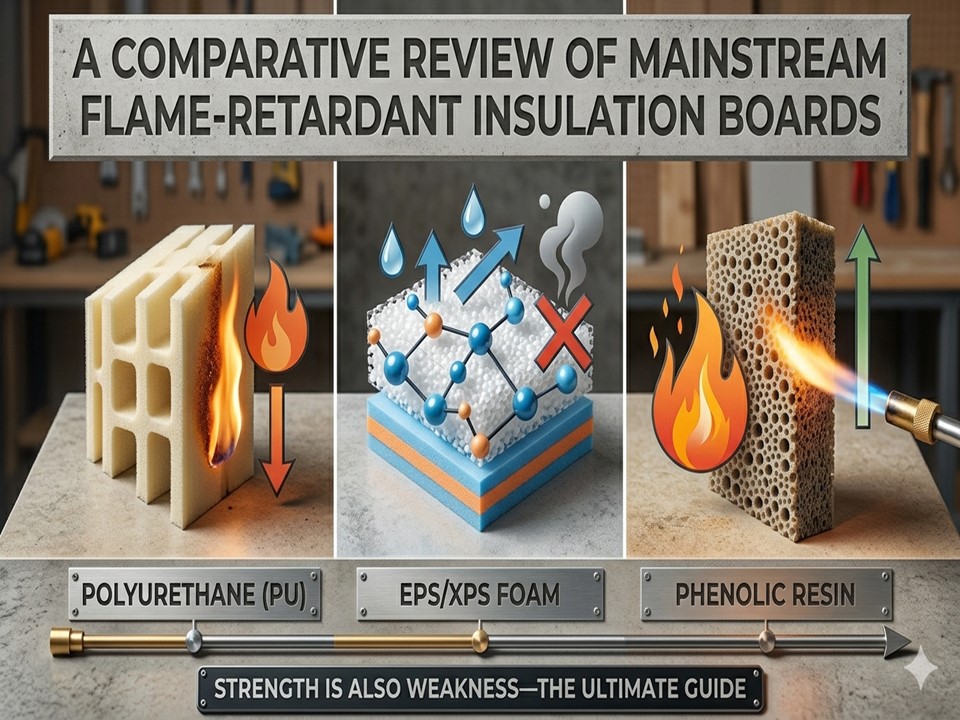
At the end of the day, building insulation boards solve two things: keeping heat in, and not catching fire. But the reality is—boards with good insulation are mostly fire-prone; those with strong fire resistance are either expensive or brittle.
Moreover, for insulation boards to truly pass fire inspections, the key lies in choosing the right flame retardant. Below is a breakdown of five mainstream flame-retardant insulation boards (or those that can be treated to flame-retardant grade). No fluff—just straight talk on who's strong where, and who crashes where.
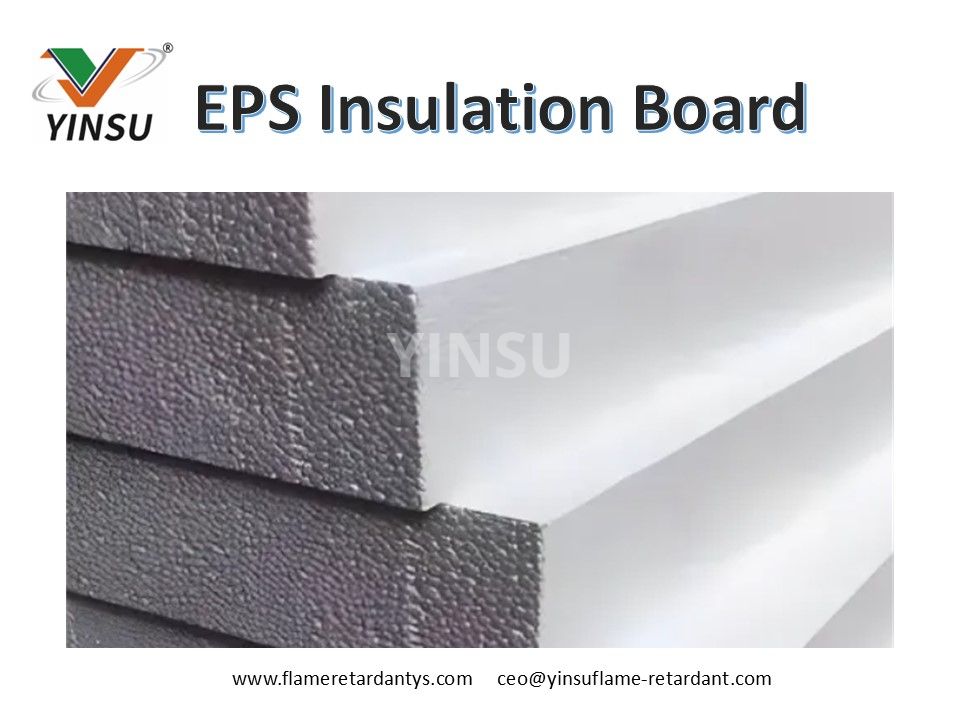
EPS Insulation Board (Expanded Polystyrene)
Ceiling: Cheap, light, easy to cut. Thermal conductivity of 0.038-0.041, good enough.
Weakness: Base board is combustible (B2 grade), must add flame retardant to reach B1 grade. But traditional flame retardant solutions (such as hexabromocyclododecane) have been banned, and alternatives are either expensive or affect adhesion. Used in humid environments for two years, insulation performance drops by 30%.
Suitable for: Ordinary residential exterior walls, non-load-bearing areas, projects with limited budgets but requiring fire compliance.
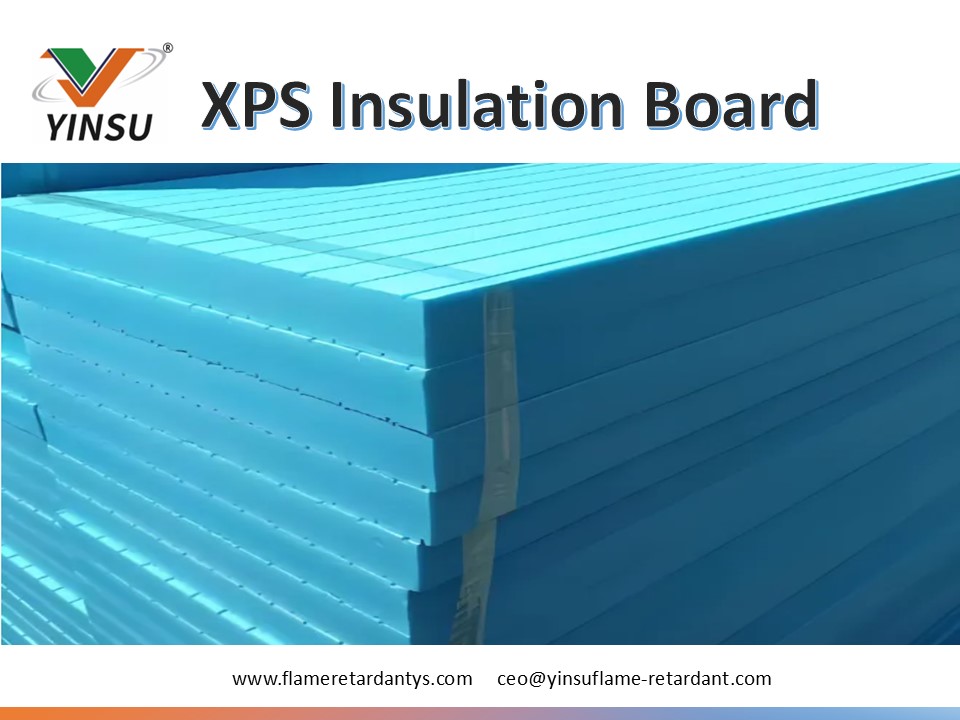
XPS Insulation Board (Extruded Polystyrene)
Ceiling: Lower thermal conductivity (0.028-0.030), high compressive strength (150-800kPa), almost zero water absorption.
Weakness: Not breathable, prone to wall condensation; more expensive than EPS; smooth surface requires interface treatment. Its flame-retardant insulation board version demands higher thermal stability from the flame retardant (processing temperature 200℃+).
Suitable for: Basements, roofs, floor heating. Use it where pressure resistance and moisture protection are needed.
PUR Insulation Board (Polyurethane)
Ceiling: Lowest thermal conductivity (0.022-0.024), seamless on-site spray application, strong adhesion, good waterproofing.
Weakness: Fire-prone (releases hydrogen cyanide when burning), high flame retardant addition affects foaming. Expensive, spray application requires professional equipment. UV exposure causes chalking.
Suitable for: Irregular roofs, cold chain, pipelines. Where insulation requirements are extreme.
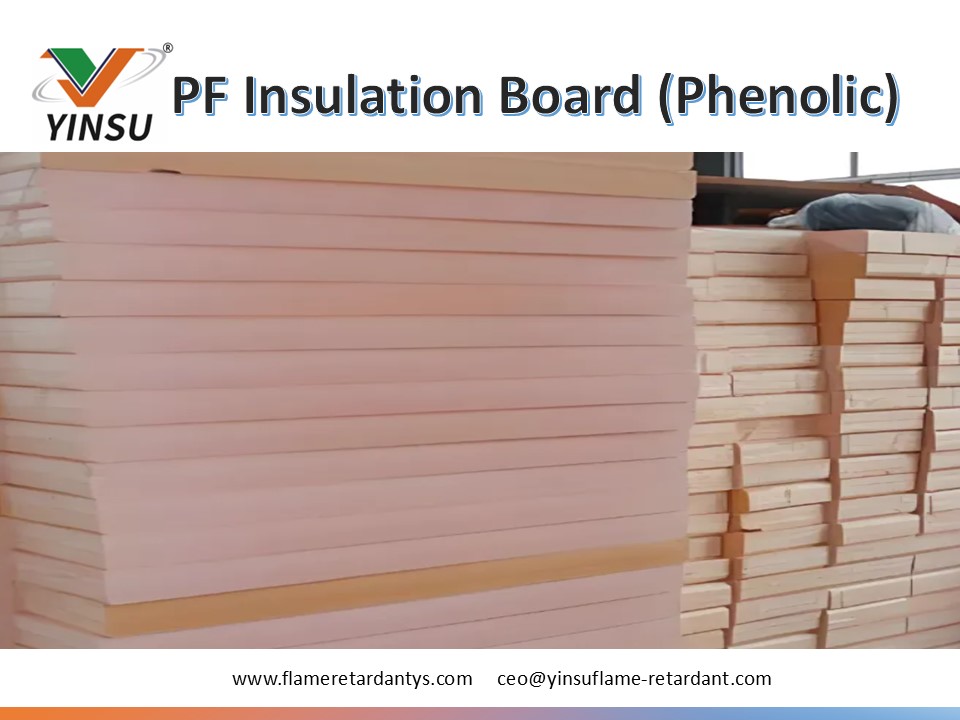
PF Insulation Board (Phenolic)
Ceiling: Inherently B1 grade (difficult to burn), chars without dripping when exposed to fire, low smoke toxicity. Thermal conductivity 0.023-0.030.
Weakness: Brittle, shatters on impact; low strength; high price. Installation requires handling like porcelain.
Suitable for: Areas with strict fire requirements (high-rises, hospitals, schools), where safety trumps insulation performance.
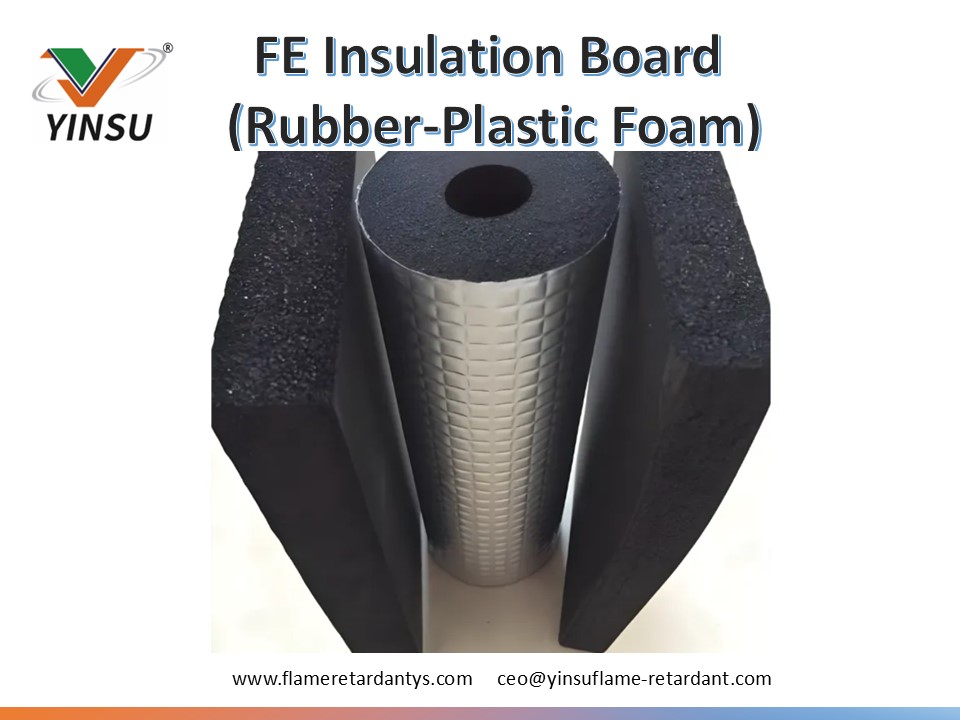
FE Insulation Board (Rubber-Plastic Foam)
Ceiling: Soft, elastic, easy to wrap around irregular pipes and valves. Condensation prevention, sound insulation.
Weakness: Average fire resistance (B1 or B2), non-load-bearing, ages and hardens over time.
Suitable for: Air conditioning ducts, ventilation systems. Only for flexible insulation, don't stick it on walls.

One-Sentence Material Selection Advice (With Flame Retardant Selection)
Want to save money and stay compliant → EPS with high-efficiency flame retardant (such as YINSU FLAME RETARDANT high-content red phosphorus flame retardant FRP-950X), but don't use in humid or load-bearing areas.
Want moisture resistance and compression strength → XPS, choose flame-retardant insulation board-specific flame retardant with good thermal stability (brominated masterbatch YS retardant compatibility with foaming process (coated red phosphorus flame retardant, organic phosphorus, inorganic phosphorus halogen-free flame retardant).
Want to pass fire inspection → PF, though brittle but life-saving (halogen-free phosphorus-nitrogen flame retardant).
Want to wrap curved pipes → FE, flexibility is king (compound red phosphorus flame retardant).
Final reminder: For high-rise buildings and densely populated areas, don't force ordinary EPS/PUR to do the job. Either choose PF, or add inorganic fireproof layers. If your insulation board flame retardant tests keep failing on dripping or smoke density, check the flame retardant compatibility first—get it right, and B1 grade isn't difficult.
About YINSU FLAME RETARDANT: We specialize in insulation board-specific flame retardants (EPS/XPS/PUR, etc.), providing halogen-free, low-smoke, non-bleeding solutions. With an addition of only 4-8%, they can pass B1 grade and UL94 V-0. For samples or technical consultation, please DM us.


