
- All
- Product Name
- Product Keyword
- Product Model
- Product Summary
- Product Description
- Multi Field Search

Specialized in PE, PVC, TPE, TPU and Low Smoke Zero Halogen (LSZH) wire and cable compound and materials.
In high-rise buildings, subway tunnels, new energy power stations and industrial complex scenarios, the fire safety of wires and cables is directly related to life and property and system reliability.
YINSU Flame Retardant Company provides customized flame retardant solutions for global customers, covering PE (polyethylene), PVC (polyvinyl chloride), TPE (thermoplastic elastomer), TPU (thermoplastic polyurethane) and LSZH (low smoke and halogen free) wire and cable systems to meet all safety requirements, ranging from UL94 V-0 flame retardant certification to EN 45545 fire protection for rail transportation and IEC 60754 low smoke and halogen free toxicity. All-round safety requirements.
Material Common Use Typical FR Type YINSU Flame Retardant Item No.
PE HDPE, LDPE, LLDPE, Red phosphorus, halogen free FR, PRP-950X, PE-XT-20, B-HFFR, MCA-B, WADP-10
Cross-linked PE cables, Bromine antimony masterbatch FR-ML-01, K100
Plastic insulated cables.
PVC PVC &Plastic insulated power cables, ATO alternatives T3, T30, FRP-950X, K100, ZHS, ZS, ZSB-A
Aluminum stranded wires, Zinc stannate
Prefabricated branch cables.
TPE Insulated wires, flexible cables Organic phosphorus MCA-B, WADP-10, FRP-950X, 95-MC
Shielded insulated cables
TPU Special purpose cables Organic phosphorus MCA-B, WADP-10, FRP-950X, 95-MC
Power cables for frequency converters.
Others Welcome to consult more details.
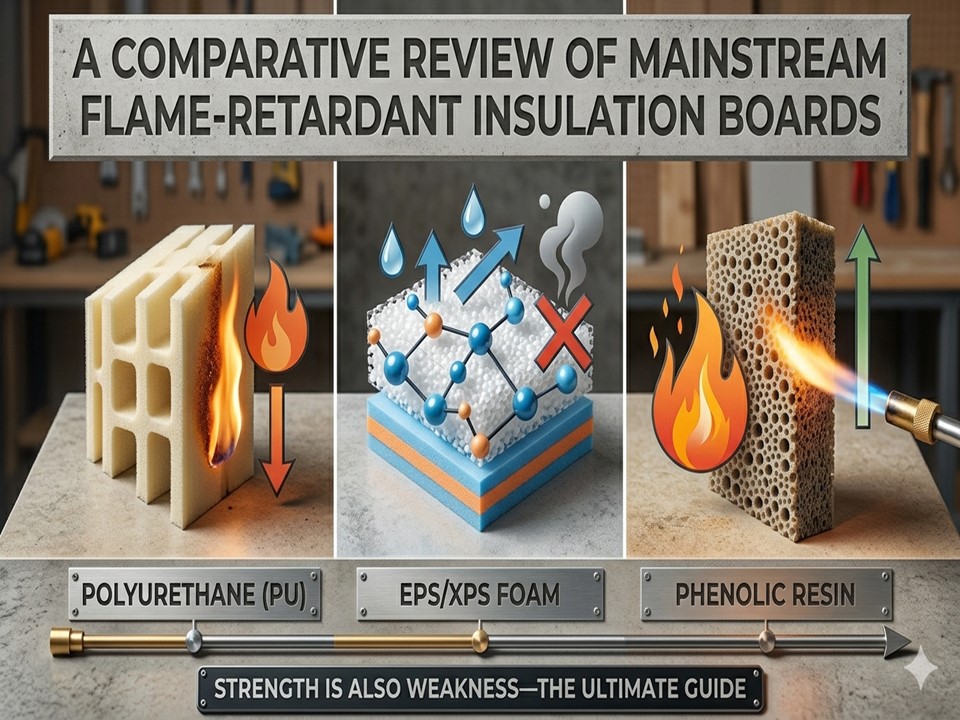
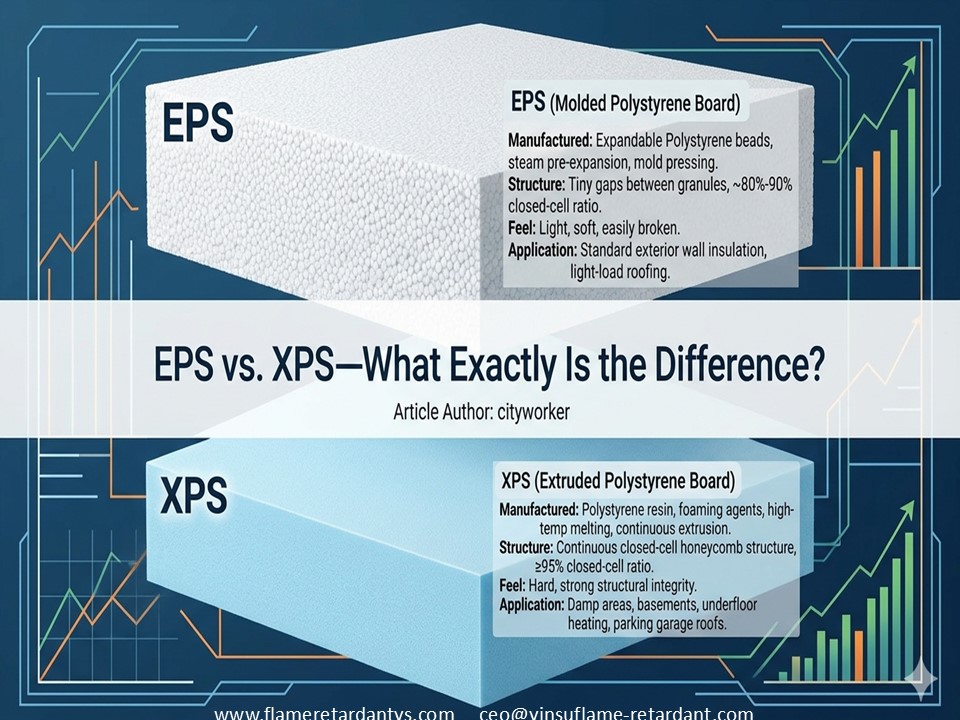


Traditional flame retardants in insulation board applications often face the dilemma of balancing cost and performance. YINSU FLAME RETARDANT technology, through an innovative halogen-free flame retardant system, achieves efficient flame retardancy while effectively controlling material costs, providing the building insulation industry with a solution that combines safety and economy. Whether for EPS or XPS insulation boards, adopting a halogen-free flame retardant solution ensures fire rating compliance while avoiding the environmental and health hazards associated with halogenated flame retardants, meeting the stringent requirements of modern buildings for green, durable insulation materials.
Discover the critical engineering and cost differences between EPS and XPS insulation boards to ensure correct material specification on your next building construction project. By implementing advanced Halogen-free Flame Retardancy and modern YINSU Flame Retardancy technologies, polymer manufacturers can easily upgrade both organic materials to strict Class B1 safety ratings without compromising core thermal or compressive performance.
Discover how the building insulation industry is overcoming the critical trade-off between strict fire safety compliance and thermal efficiency in XPS and EPS insulation boards. By leveraging cutting-edge advancements in Halogen-free Flame Retardancy, YINSU Flame Retardancy solutions now enable manufacturers to achieve superior UL94 V-0 and B1 fire ratings without sacrificing mechanical performance or moisture resistance.
XPS insulation board flame retardancy faces dual pressure from environmental bans and costs. Yinsu Flame Retardant provides high-efficiency brominated and halogen-free flame retardant solutions. With an addition of only 4-8%, they can pass UL94 V-0 and building material B1 grade tests. Yinsu Flame Retardant is specially developed for XPS/EPS insulation boards, reducing overall costs by 20-30% and helping enterprises achieve compliance and cost reduction.
The use of flame retardants in XPS insulation is crucial for ensuring fire safety in building construction. These additives play a vital role in reducing the flammability of XPS and slowing down the spread of fire. However, it is important to carefully consider the strengths and weaknesses of different flame retardants to strike a balance between fire safety and potential environmental and health concerns.
Flame retardants play an essential role in enhancing fire safety in building construction, particularly in insulation boards. By incorporating these materials, construction professionals can significantly reduce the risk of fire-related incidents, protect lives, and safeguard properties. Staying informed about the latest advancements in flame retardant technologies and adhering to best practices are crucial for ensuring the highest level of fire protection in construction projects. By prioritizing fire safety and embracing cutting-edge flame retardant materials, we can contribute to building safer and more resilient structures for the future. The ongoing developments in this field are not just a testament to scientific and technological progress, but also a commitment to a safer and more sustainable built environment.
