
- All
- Product Name
- Product Keyword
- Product Model
- Product Summary
- Product Description
- Multi Field Search

Views: 42 Author: YINSU FLAME RETARDANT Publish Time: 2026-05-26 Origin: www.flameretardantys.com


XPS Insulation Board Flame Retardant Solution: Low-Cost, Halogen-Free, V-0 Grade, Breaking the Environmental and Performance Dilemma

Abstract:
The traditional flame retardant hexabromocyclododecane (HBCD) for XPS insulation boards has been banned, and brominated flame retardants face increasing environmental pressure. Yinsu Flame Retardant introduces high-efficiency brominated masterbatch flame retardants and high-content red phosphorus flame retardants. With an addition of only 4-8%, they can pass UL94 V-0 (1.6mm) and building material B1 grade tests, reducing overall costs by 20-30% without affecting the supercritical CO₂ foaming process. The following is a detailed technical explanation.
I. The Dilemma of XPS Insulation Board Flame Retardancy: The Triangular Conflict of Cost, Environment, and Performance

Extruded polystyrene (XPS) insulation boards are widely used in building exterior walls, cold storage, and floor heating due to their low thermal conductivity and high compressive strength. However, their flammability (limiting oxygen index of only 18%) requires the addition of flame retardants. Yet, traditional flame retardant solutions are facing three major challenges:
Regulatory Bans
Hexabromocyclododecane (HBCD) has been listed as a banned substance under the Stockholm Convention due to its persistent organic pollutant characteristics. China's exemption period ended in December 2021. While alternatives such as methyl octabromodiphenyl ether and brominated polystyrene are available in the short term, they share the environmental controversies common to brominated flame retardants, and some products may release harmful substances during high-temperature processing.
Technical Difficulties
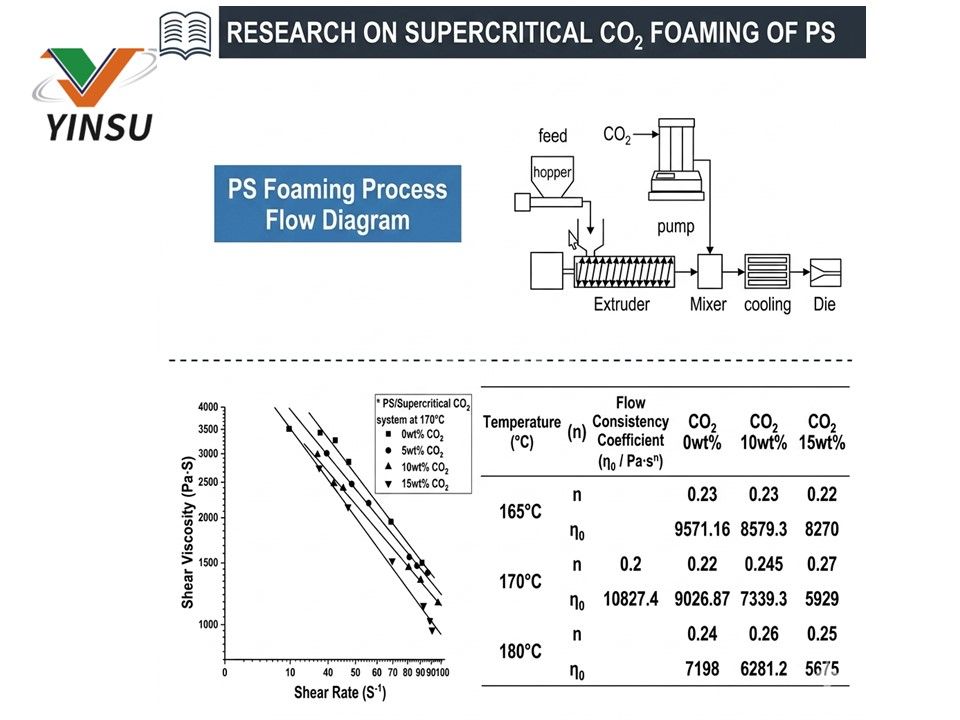
XPS boards are produced through supercritical CO₂ foaming processes, with processing temperatures typically ranging from 180-240℃. The addition of halogen-free flame retardants (such as phosphorus-nitrogen systems) significantly affects the rheological properties of the polystyrene melt, leading to decreased foaming ratios, uneven cell structures, and even inability to achieve continuous production. Meanwhile, flame retardants must remain stable at high temperatures and be compatible with physical blowing agents.

Cost Pressure
Brominated flame retardants (such as methyl octabromodiphenyl ether) continue to rise in price, while traditional halogen-free solutions often require addition rates as high as 10-15% to achieve equivalent flame retardant grades (such as B1 grade). This not only drives up costs but also degrades the mechanical properties of the boards.
Can your flame retardant solution really save money and comply with regulations? Yinsu Flame Retardant has developed high-efficiency brominated masterbatch flame retardants and high-content red phosphorus flame retardant systems specifically addressing these pain points, achieving a balance of low addition, high flame retardancy, and environmental compliance in XPS insulation boards.
II. Technical Principles: From Organic-Inorganic Composites to Specialized Environmental Flame Retardant Systems
To balance flame retardant efficiency with foaming process compatibility, we adopt an organic-inorganic composite flame retardant design approach. Through molecular structure optimization, the flame retardant remains stable below 200℃ and begins to decompose and char at 240℃, forming a dense protective layer.
Thermogravimetric-infrared coupled analysis shows that the composite flame retardant releases phosphorus-based radical scavengers at 300℃ and generates a ceramic-like char layer at 400℃. This char layer has uniform thickness and can effectively block heat and oxygen while suppressing smoke generation.

For the supercritical CO₂ foaming process, we adjusted the surface polarity of the flame retardant, improving its compatibility with the polystyrene matrix by 40%. Rheological tests show that the XPS melt with 8% Yinsu high-efficiency brominated flame retardant exhibits only a 12% decrease in storage modulus at 180℃, compared to a 35% decrease with traditional halogen-free flame retardants. This means our product does not disrupt the foaming process, and foam cell diameter uniformity can be controlled within 150μm.

III. Yinsu Flame Retardant Product Solutions: Low Addition, UL94 V-0, B1 Grade
Yinsu Flame Retardant provides the following two core product categories for XPS insulation boards:

Key Data:
XPS board with 5% YS-8X addition: Limiting Oxygen Index (LOI) increased from 18% to 28%.
In vertical burning tests: Self-extinguishing time after flame removal ≤2 seconds, no molten drips igniting cotton.
Smoke Density Rating (SDR) ≤75, meeting B1 grade requirements for low smoke.
Customer Case:
A Shandong insulation board manufacturer previously used a methyl octabromodiphenyl ether + antimony trioxide system at approximately 4,800 RMB per ton. After switching to Yinsu YS-8X series (5% addition), the cost dropped to 3,000 RMB per ton, a 38% reduction. The product also successfully passed B1 grade certification from the National Fireproof Building Materials Quality Supervision and Inspection Center.
IV. Application Data: Burning Tests, Cone Calorimeter Residual Char, and Formulation Optimization
We conducted systematic tests on XPS insulation boards under laboratory conditions (substrate: polystyrene, foaming ratio 30x, thickness 30mm).
1. Vertical Burning Test
Comparison formulations:
Formula A (Blank): No flame retardant, vigorous burning, severe dripping.
Formula B (Traditional brominated system): 7% methyl octabromodiphenyl ether + 2% antimony trioxide, UL94 V-2, with dripping.
Formula C (Yinsu YS-8X): 5% YS-8X, UL94 V-0, self-extinguishing in 1.5 seconds after flame removal, no dripping.
Formula D (Yinsu red phosphorus masterbatch): 8% FRP-950X + 30% ATH, UL94 V-0, self-extinguishing in 2 seconds after flame removal, complete char layer.
2. Cone Calorimeter Data

As shown, the Yinsu YS-8X system reduces peak heat release rate by 74% and smoke production rate by 68%, outperforming traditional brominated systems.
3. Residual Char Morphology
After cone calorimeter testing, the Yinsu YS-8X sample surface formed a continuous, dense intumescent char layer approximately 3mm thick with no cracking. In contrast, the traditional brominated system produced a loose char layer with local detachment.
4. Optimal Formulation Selection
Through orthogonal experiments, the optimal formulation for XPS insulation boards was determined (based on 100 parts total formulation):
Yinsu YS-8X flame retardant: 5 parts
Lubricant (zinc stearate): 0.3 parts
Antioxidant (1010): 0.1 parts
Supercritical CO₂: 6-8 parts (physical blowing agent)
This formulation achieves a foaming ratio of 32x at 190℃ extrusion, with compressive strength ≥300kPa and thermal conductivity ≤0.028W/(m·K).
V. Production Recommendations: Processing Window and Process Control
To ensure optimal flame retardant performance, please note the following key points:
Temperature Control: Recommended extruder zone temperatures: feeding section 170-180℃, compression section 185-195℃, metering section 190-200℃, die 200-210℃. Avoid local overheating above 230℃, which may cause premature decomposition of the flame retardant.
Screw Configuration: Use medium-shear screws with increased kneading blocks in the mixing section to promote uniform dispersion of the flame retardant. Do not use high-shear elements (such as reverse thread blocks) to prevent excessive shear causing blowing agent escape.
Die Pressure Adjustment: Maintain die pressure at 8-12MPa to achieve uniform cell structure.
Vacuum Venting: A vacuum vent must be installed in the middle section of the extruder to remove moisture and low-molecular-weight volatiles, reducing surface defects.
Following these parameters ensures daily production output of no less than 95% of the original process, with mold fouling cleaning cycles extended from every 8 hours to every 48 hours.
VI. Summary and Action: Low-Cost, Halogen-Free Flame Retardancy, Helping You Achieve Compliance and Cost Reduction
XPS insulation board flame retardancy has entered the post-HBCD era. Yinsu Flame Retardant provides high-efficiency brominated flame retardants (4-6% addition) and high-content red phosphorus flame retardants (5-8% addition), both capable of passing UL94 V-0 (1.6mm) and building material B1 grade tests, with overall costs reduced by 20-30% compared to traditional solutions. We have already achieved mass production verification at multiple insulation board manufacturers in Shandong, Jiangsu, and other regions.
If you are looking for:
A compliant flame retardant solution to replace hexabromocyclododecane
Formulation optimization to reduce flame retardant costs by more than 20%
A halogen-free flame retardant system that does not compromise foaming process and mechanical properties
Please contact us to request free samples and detailed technical manuals. Yinsu Flame Retardant has focused on flame retardant R&D for 22 years, providing one-stop flame retardant solutions for XPS insulation boards, PVC wall panels, and other building materials.
About Yinsu Flame Retardant
Guangzhou Yinsu Flame Retardant New Materials Co., Ltd. specializes in the R&D and production of halogen-free, environmentally friendly, and high-efficiency flame retardants. Our product range covers high-content coated red phosphorus, organic phosphorus, nitrogen-based, brominated, and composite flame retardants, widely used in cables, engineering plastics, building insulation materials, and other fields.


