
- All
- Product Name
- Product Keyword
- Product Model
- Product Summary
- Product Description
- Multi Field Search

Views: 32 Author: Yinsu Flame Retardant Publish Time: 2026-08-14 Origin: www.flameretardantys.com


LSZH vs. PVC: A Practical Guide for Engineers

Last month, the technical director of a cable manufacturer sent me a set of project specifications and asked if I could help him develop an LSZH solution. The project involved medium-voltage power distribution cables for a domestic data center, and the client required Class B1 flame retardancy. He ran the numbers: the cost of LSZH materials was 40% higher than the existing PVC formulation; the extruder screw would need to be modified; and the drying room would need to be expanded. What was even more troublesome—after testing three batches of samples, the sheath surface was covered with air bubbles, and the elongation at break dropped from 280% to 160%, leading the client to reject the samples outright during acceptance testing.
I asked him to turn to the last page of the specification sheet and, pointing to a line there, asked, “Does it specify smoke density and corrosivity requirements here?” He searched for a long time and said no—it only listed Class B1 and V-0.
This is the pitfall many cable manufacturers are currently falling into: equating “flame retardancy upgrades” directly with “switching to LSZH,” while forgetting to first consider what the end-user is actually paying for.
Here’s the bottom line: PVC and LSZH will coexist for a long time to come—they are not substitutes for one another. Choosing the wrong base material can result in wasted costs at best and delivery delays at worst. I recommend bookmarking the decision tree below.
The true cost of LSZH goes far beyond the 30–50% difference in material prices
Many business owners base their decisions solely on material purchase prices, but technical directors and formulation engineers must calculate the total cost. Compared to PVC, LSZH involves three hidden costs:
First: Equipment retrofitting costs. LSZH uses EVA/PE as its base material, filled with 40–60% aluminum or magnesium hydroxide, resulting in a melt viscosity 2–3 times that of PVC. If your extruder has a screw length-to-diameter ratio below 25:1 or insufficient torque reserve, direct feeding will cause the machine to jam. Many factories retrofit their entire extrusion lines specifically for a single LSZH order, with costs starting in the hundreds of thousands.
Second: Process debugging costs. LSZH is extremely sensitive to moisture and must be dried at 80°C for 4–6 hours before extrusion, whereas PVC cable compounds typically do not require pre-drying. Even more challenging is the thermal processing window—the decomposition temperature of LSZH is only 10–15°C higher than the extrusion temperature, and the temperature rise in the rear section of the barrel can reach 15–34°C. resulting in pores, rough inner walls, or even cracks on the inner and outer surfaces and cross-sections of the finished sheath. It is common for the trial production cycle to extend from 3 days for PVC to 3 weeks.
Third: Performance compromise costs. The elongation at break for highly filled LSZH is typically 150–200%, whereas that for flexible PVC cable compounds can exceed 250%. In applications requiring frequent bending—such as drag-chain cables and robot cables—the service life of LSZH may be only 60% that of PVC.
When these three factors are combined, the total cost of switching to LSZH may be 2–3 times the difference in material prices. If the project itself does not have strict requirements for smoke density, this expense is unwarranted.
Engineer’s Product Selection Decision Tree: Three Scenarios, Three Answers

When you receive a project specification, don’t start by asking, “What material should we use?” Instead, ask, “What are the risks in the end-use scenario?”
Scenario 1: Standard building wiring, residential wiring, and general industrial control cables
→ Upgrade to flame-retardant PVC; avoid LSZH.
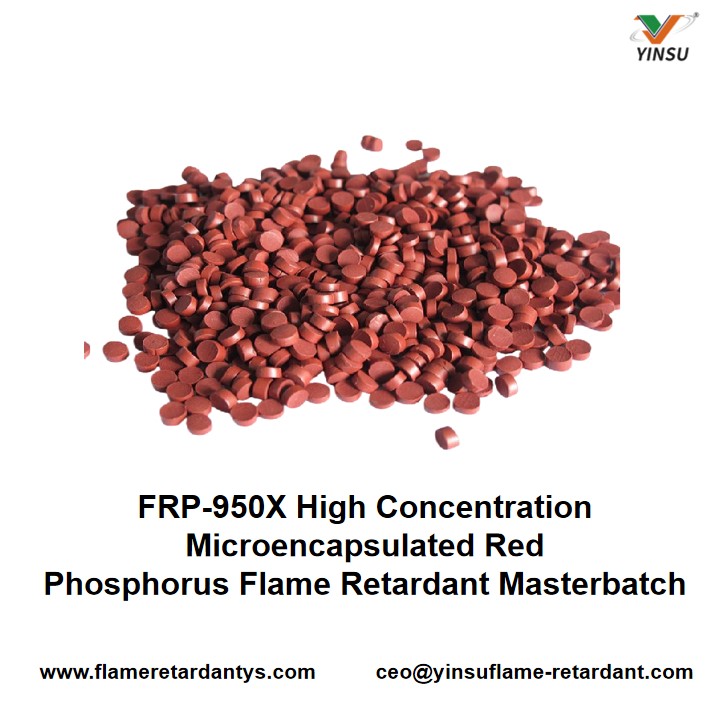
The flame-retardant requirements for these scenarios are “no flame spread” and “self-extinguishing”; there are no extreme requirements for smoke density or toxicity. Upgrading PVC to Class B1 or V-0 by adding high-efficiency flame retardants incurs only an 8–12% increase in cost. Yinsu red phosphorus-based flame retardant solution requires only 10–12 parts per hundred in PVC cable compound to pass UL-94 V-0, with the impact on elongation at break kept within 10%, and no modifications to existing extrusion equipment or processes are required.
Scenario 2: Subways, Hospitals, Data Centers, Ship Compartments
→ Go with LSZH without hesitation.
The core metrics for these scenarios are not flame retardancy ratings, but rather smoke density and toxicity during a fire. GB/T 19666 specifies the following requirements for low-smoke, halogen-free cables: smoke toxicity must meet Class t1, corrosivity must meet Class a1, smoke pH must be ≥4.3, and electrical conductivity must be ≤10 µs/mm. Even with modification, it is extremely difficult for PVC systems to consistently meet this set of criteria. For projects of this nature, insisting on PVC is a ticking time bomb when it comes to fire safety inspections later on.
Scenario 3: Construction Projects Exported to the EU
→ Red phosphorus synergistic PVC can serve as a middle ground.
The EU CPR (EN 50575) specifies fire resistance ratings for cables ranging from Eca to B2ca. For ratings of B2ca and below, PVC cable compounds modified through the synergistic combination of red phosphorus and MCA (melamine cyanurate) can meet the flame spread and heat release requirements of EN 50399, while smoke density (EN 61034) can be optimized by controlling the release rate of red phosphorus. This saves more than 20% in material costs compared to using LSZH directly and requires no modification to the extrusion equipment.
If you choose the PVC upgrade path, you must complete two technical steps.
Step 1: Antimony-free conversion. Replace lead salts with Ca/Zn or rare earth heat stabilizers, and replace antimony trioxide with red phosphorus. Antimony trioxide has been flagged on the EU REACH SVHC Candidate List and is directly excluded from export projects. Yinsu’s coated red phosphorus undergoes inorganic-organic composite passivation treatment and is highly compatible with Ca/Zn stabilizers, eliminating the discoloration issues caused by the reaction between traditional red phosphorus and metal soaps.
Step 2:Low-smoke modification. While red phosphorus’s condensed-phase char formation mechanism suppresses flame spread, an overly dense char layer may produce large amounts of CO rather than CO₂, which actually increases smoke density. By controlling the particle size distribution of red phosphorus (D50 10–15 µm) and the thickness of the coating layer, YinSu ensures that the combustion residue retains a porous structure rather than a glassy state. In the GB/T 19666 bundle combustion test, smoke density values can typically be controlled to within 70% of the standard limit.
Three Common Pitfalls—We Recommend Printing These and Posting Them on Your Lab Wall
Pitfall 1: Assuming that LSZH can use the same extrusion temperatures as PVC. The thermal processing window for LSZH is much narrower than that of PVC; even slightly higher temperatures cause decomposition and discoloration, while slightly lower temperatures result in poor plasticization. Before switching to LSZH, first confirm that the extruder’s temperature control accuracy can be maintained within ±2°C.
Pitfall 2: Assuming that PVC with red phosphorus added will pass all smoke density tests. Red phosphorus with different particle sizes exhibits different combustion behaviors. For projects with stringent smoke density requirements (such as EN 61034), you must confirm in advance that the particle size and coating of the red phosphorus comply with the standard; you cannot simply use a generic flame retardant.
Pitfall 3: Focusing only on the unit price of the material without calculating the total cost. The fact that LSZH materials cost 30–50% more is just the beginning; hidden costs such as equipment retrofitting, process debugging, yield losses, and delivery delays often eat up the lion’s share of profits.
The next time you receive a project specification, go straight to the flame-retardant requirements section and check two key metrics first:
smoke density requirements (e.g., minimum light transmittance ≥ 60%) and corrosivity requirements (e.g., pH ≥ 4.3, conductivity ≤ 10 µs/mm).
If neither is specified, or if only “flame-retardant,” “Class B1,” or “V-0” is listed → Use a PVC upgrade solution and save your budget for areas where it’s more worthwhile.
If smoke density and corrosion resistance specifications are explicitly listed → Go with LSZH right away; don’t force modifications on PVC.

The enemy of PVC cables has never been LSZH, but rather indiscriminate and blind substitution. The design logic behind YinSu flame-retardant solutions is simple: let PVC last longer in suitable scenarios, rather than forcing it to perform in unsuitable ones.


