
- All
- Product Name
- Product Keyword
- Product Model
- Product Summary
- Product Description
- Multi Field Search

Specialized in PE, PVC, TPE, TPU and Low Smoke Zero Halogen (LSZH) wire and cable compound and materials.
In high-rise buildings, subway tunnels, new energy power stations and industrial complex scenarios, the fire safety of wires and cables is directly related to life and property and system reliability.
YINSU Flame Retardant Company provides customized flame retardant solutions for global customers, covering PE (polyethylene), PVC (polyvinyl chloride), TPE (thermoplastic elastomer), TPU (thermoplastic polyurethane) and LSZH (low smoke and halogen free) wire and cable systems to meet all safety requirements, ranging from UL94 V-0 flame retardant certification to EN 45545 fire protection for rail transportation and IEC 60754 low smoke and halogen free toxicity. All-round safety requirements.
Material Common Use Typical FR Type YINSU Flame Retardant Item No.
PE HDPE, LDPE, LLDPE, Red phosphorus, halogen free FR, PRP-950X, PE-XT-20, B-HFFR, MCA-B, WADP-10
Cross-linked PE cables, Bromine antimony masterbatch FR-ML-01, K100
Plastic insulated cables.
PVC PVC &Plastic insulated power cables, ATO alternatives T3, T30, FRP-950X, K100, ZHS, ZS, ZSB-A
Aluminum stranded wires, Zinc stannate
Prefabricated branch cables.
TPE Insulated wires, flexible cables Organic phosphorus MCA-B, WADP-10, FRP-950X, 95-MC
Shielded insulated cables
TPU Special purpose cables Organic phosphorus MCA-B, WADP-10, FRP-950X, 95-MC
Power cables for frequency converters.
Others Welcome to consult more details.


High-density polyurethane foam faces the “impossible triangle” of damping, flame retardancy, and strength. Yinsu Flame Retardant employs a dual-technology approach—“intrinsic flame retardancy (molecular incorporation of phosphorus-containing monomers) + surface armor (polysiloxane flame-retardant layer)”—to simultaneously enhance all three performance metrics, thereby avoiding the mechanical property degradation associated with traditional additive-based flame retardants. The LEFP series of microcellular foam materials is already in mass production and is being used in applications such as automotive shims and railroad sleeper pads.

When exporting polyurethane flame retardants, the regulatory frameworks—including the EU’s REACH, Southeast Asia’s TISI, and new energy aging tests—each follow different logic. Which scenarios are best suited for red phosphorus, paste-form products, and phosphorus-nitrogen synergistic systems, respectively? This article outlines the selection criteria for these three markets to serve as a reference for export-oriented manufacturers.

ADM Flame Retardant for PU LeatherThose of you working on flame retardancy for PU leather know the drill—Adding flame retardants is easy; the real challenge is ensuring performance isn’t compromised afterward. Too much flame retardant makes the leather stiff and reduces its softness, leading to cu
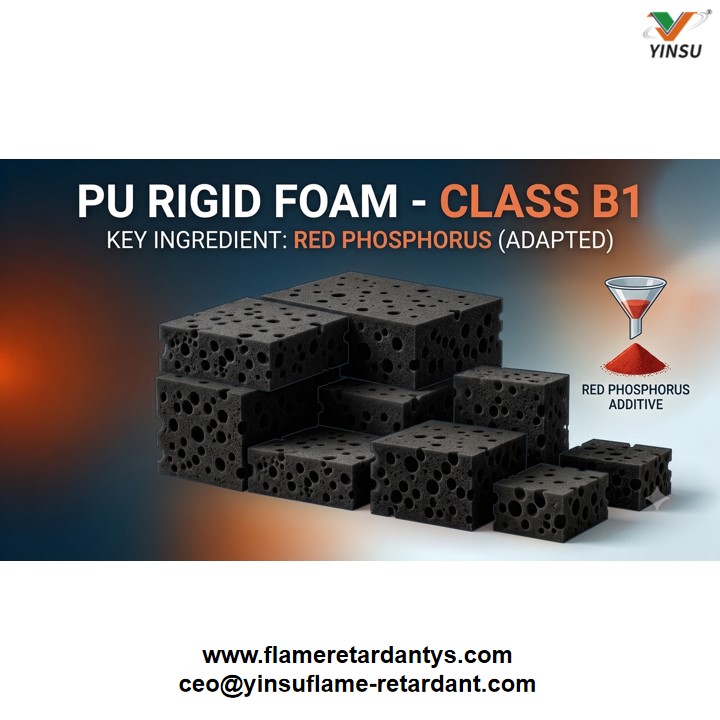
For Class B1 rigid foam insulation boards, adding 10–14 parts of red phosphorus flame retardant can reduce the FIGRA value to below 100 W/s while maintaining a closed-cell rate of over 87%. Compared to aluminum hydroxide-based systems, this results in annual savings of approximately $20,000 to $30,000 in flame retardant costs. Silver-coated red phosphorus is available in both powder and paste forms, making it suitable for both manual and continuous production lines.
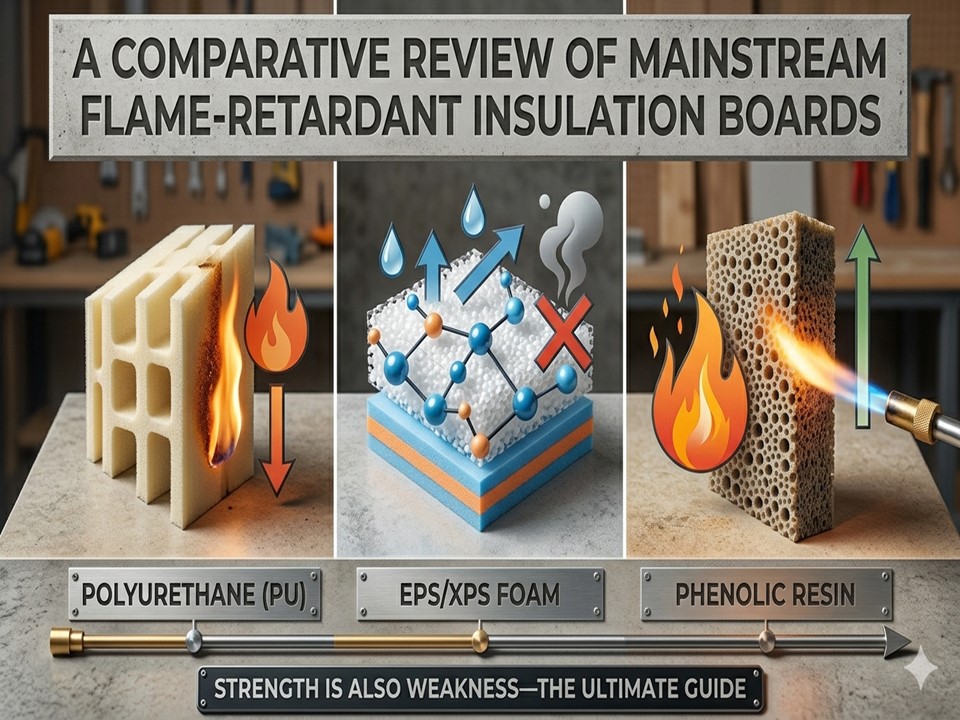
Traditional flame retardants in insulation board applications often face the dilemma of balancing cost and performance. YINSU FLAME RETARDANT technology, through an innovative halogen-free flame retardant system, achieves efficient flame retardancy while effectively controlling material costs, providing the building insulation industry with a solution that combines safety and economy. Whether for EPS or XPS insulation boards, adopting a halogen-free flame retardant solution ensures fire rating compliance while avoiding the environmental and health hazards associated with halogenated flame retardants, meeting the stringent requirements of modern buildings for green, durable insulation materials.

New Focus in Battery Pack Flame Retardancy: Comparing aerogel, mica, and foamed ceramic insulation solutions, revealing how to synergize with halogen-free flame retardants to meet new energy vehicle flame retardancy standards – achieving no propagation ≥5 minutes after single-cell thermal runaway, easily complying with GB 38031 and EU ECE R100 battery pack flame retardancy regulations
