
- All
- Product Name
- Product Keyword
- Product Model
- Product Summary
- Product Description
- Multi Field Search

Specialized in PE, PVC, TPE, TPU and Low Smoke Zero Halogen (LSZH) wire and cable compound and materials.
In high-rise buildings, subway tunnels, new energy power stations and industrial complex scenarios, the fire safety of wires and cables is directly related to life and property and system reliability.
YINSU Flame Retardant Company provides customized flame retardant solutions for global customers, covering PE (polyethylene), PVC (polyvinyl chloride), TPE (thermoplastic elastomer), TPU (thermoplastic polyurethane) and LSZH (low smoke and halogen free) wire and cable systems to meet all safety requirements, ranging from UL94 V-0 flame retardant certification to EN 45545 fire protection for rail transportation and IEC 60754 low smoke and halogen free toxicity. All-round safety requirements.
Material Common Use Typical FR Type YINSU Flame Retardant Item No.
PE HDPE, LDPE, LLDPE, Red phosphorus, halogen free FR, PRP-950X, PE-XT-20, B-HFFR, MCA-B, WADP-10
Cross-linked PE cables, Bromine antimony masterbatch FR-ML-01, K100
Plastic insulated cables.
PVC PVC &Plastic insulated power cables, ATO alternatives T3, T30, FRP-950X, K100, ZHS, ZS, ZSB-A
Aluminum stranded wires, Zinc stannate
Prefabricated branch cables.
TPE Insulated wires, flexible cables Organic phosphorus MCA-B, WADP-10, FRP-950X, 95-MC
Shielded insulated cables
TPU Special purpose cables Organic phosphorus MCA-B, WADP-10, FRP-950X, 95-MC
Power cables for frequency converters.
Others Welcome to consult more details.


Bromine fell by 1,750 yuan per metric ton during the week to 37,750 yuan per metric ton, a decline of 4.6 percent. Downstream buyers were strongly pushing for lower prices, causing transaction prices to trend downward. While cost support for bromine-based flame retardants has weakened, the impact has been slow to materialize. Combined with the traditional off-season for demand, the flame retardant market is under short-term pressure and is trading on a weak note.

A Comprehensive Analysis of PVC Flame Retardant Types, Synergistic Mechanisms, and the UL 94 Flame Retardancy Rating Standard. Due to the presence of plasticizers, the LOI of flexible PVC decreases significantly; therefore, highly effective flame retardancy must be achieved through synergistic blending of chlorinated paraffin, red phosphorus, antimony trioxide, and other compounds. This article provides a detailed explanation of the mechanisms of action for halogen-based, phosphorus-based, nitrogen-based, and inorganic flame retardants, covering classic case studies in applications such as PVC cable compounds, pipes, and profiles, and serves as a technical reference for formulation engineers engaged in PVC flame retardant modification.

Flame-retardant PVC intended for export must comply with various regulations, including the EU’s REACH (SVHC screening + CPR fire safety requirements), California Proposition 65 (limit of 25 ppm per substance), and Southeast Asian chemical registration requirements. Since copper wires come into contact with cables, whereas pipes do not, the paths to compliance differ significantly. YinSu Flame Retardant offers export compliance solutions tailored to specific product types and markets, thereby reducing the risk associated with formulation adjustments.

PVC cable compounds still account for 38.7% of the global market (approximately $7.07 billion), while LSZH materials are 30–50% more expensive and require equipment upgrades. GB/T 19666 specifies that low-smoke, halogen-free cables must have a smoke density and light transmittance of ≥60%, a pH of ≥4.3, and a conductivity of ≤10 µs/mm. For requirements related to smoke density and corrosivity, upgrading to flame-retardant PVC (replacing antimony trioxide with red phosphorus, resulting in a cost increase of only 8–12%) is a more rational choice.
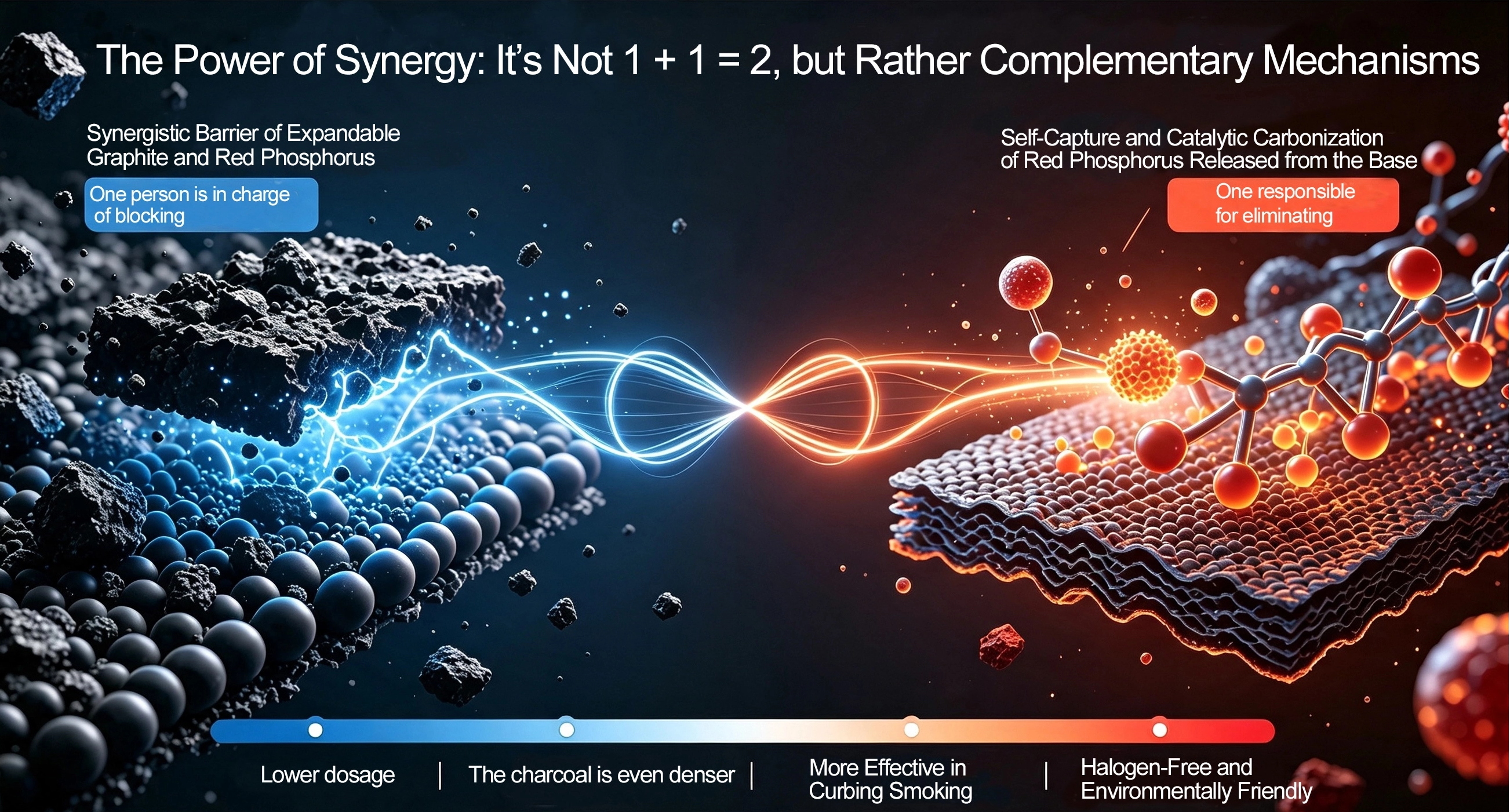
When the physical barrier provided by expandable graphite meets the chemical flame retardancy of red phosphorus, rubber flame retardancy finally breaks free from its “reliance on halogens” and moves toward “high-efficiency synergy.”

Bromine prices rose by 1,500 yuan per metric ton for the week, and cost pressures on bromine-based flame retardants continue to mount. With tight supply and manufacturers holding back on sales, prices are more likely to rise than fall in the short term; downstream companies should focus on managing their procurement schedules and evaluating halogen-free alternatives.
