
- All
- Product Name
- Product Keyword
- Product Model
- Product Summary
- Product Description
- Multi Field Search

Specialized in PE, PVC, TPE, TPU and Low Smoke Zero Halogen (LSZH) wire and cable compound and materials.
In high-rise buildings, subway tunnels, new energy power stations and industrial complex scenarios, the fire safety of wires and cables is directly related to life and property and system reliability.
YINSU Flame Retardant Company provides customized flame retardant solutions for global customers, covering PE (polyethylene), PVC (polyvinyl chloride), TPE (thermoplastic elastomer), TPU (thermoplastic polyurethane) and LSZH (low smoke and halogen free) wire and cable systems to meet all safety requirements, ranging from UL94 V-0 flame retardant certification to EN 45545 fire protection for rail transportation and IEC 60754 low smoke and halogen free toxicity. All-round safety requirements.
Material Common Use Typical FR Type YINSU Flame Retardant Item No.
PE HDPE, LDPE, LLDPE, Red phosphorus, halogen free FR, PRP-950X, PE-XT-20, YS-F22B, MCA-B
Cross-linked PE cables, Bromine antimony masterbatch MDH, ATH
Plastic insulated cables.
PVC PVC &Plastic insulated power cables, T3 / ATO alternatives T3, T30
Aluminum stranded wires,
Prefabricated branch cables.
TPE Insulated wires, flexible cables Organic phosphorus YS-F22B, YS-9003
Shielded insulated cables
TPU Special purpose cables Organic phosphorus YS-F22B, YS-9003
Power cables for frequency converters.
Others Welcome to consult more details.

![[Weekly Bromine Review]: Bullish Sentiment Prevails; Trading Volume Continues to Rise (July 17–24, 2026)](http://ikrorwxhnnrili5q-static.micyjz.com/cloud/pmBprKkqlrSRplrlkmnqjq/0727-xiusuyin_714_640.png)


High-density polyurethane foam faces the “impossible triangle” of damping, flame retardancy, and strength. Yinsu Flame Retardant employs a dual-technology approach—“intrinsic flame retardancy (molecular incorporation of phosphorus-containing monomers) + surface armor (polysiloxane flame-retardant layer)”—to simultaneously enhance all three performance metrics, thereby avoiding the mechanical property degradation associated with traditional additive-based flame retardants. The LEFP series of microcellular foam materials is already in mass production and is being used in applications such as automotive shims and railroad sleeper pads.
Bromine prices rose by 1,500 yuan per metric ton for the week, and cost pressures on bromine-based flame retardants continue to mount. With tight supply and manufacturers holding back on sales, prices are more likely to rise than fall in the short term; downstream companies should focus on managing their procurement schedules and evaluating halogen-free alternatives.
Polyurethane for automotive interiors must simultaneously meet three standards: FMVSS 302 flame retardancy, low misting (≤2 mg), and low odor (VDA 270 ≤3.0). The phosphorus-nitrogen synergistic system limits the flame retardant loading to 16 parts, achieves an LOI of 29–30%, and meets the V-0 rating, while also reducing the contribution of volatile compounds, providing a viable path for formulation balance.
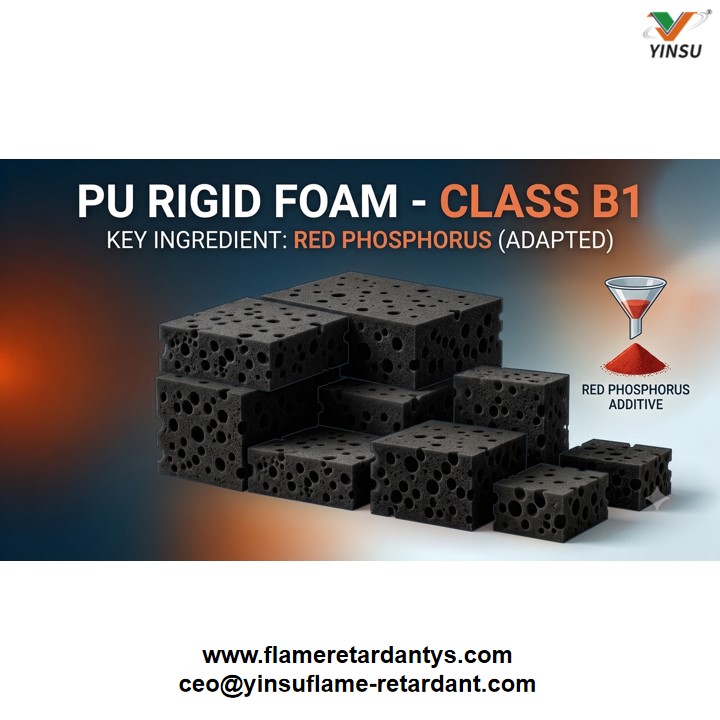
For Class B1 rigid foam insulation boards, adding 10–14 parts of red phosphorus flame retardant can reduce the FIGRA value to below 100 W/s while maintaining a closed-cell rate of over 87%. Compared to aluminum hydroxide-based systems, this results in annual savings of approximately $20,000 to $30,000 in flame retardant costs. Silver-coated red phosphorus is available in both powder and paste forms, making it suitable for both manual and continuous production lines.
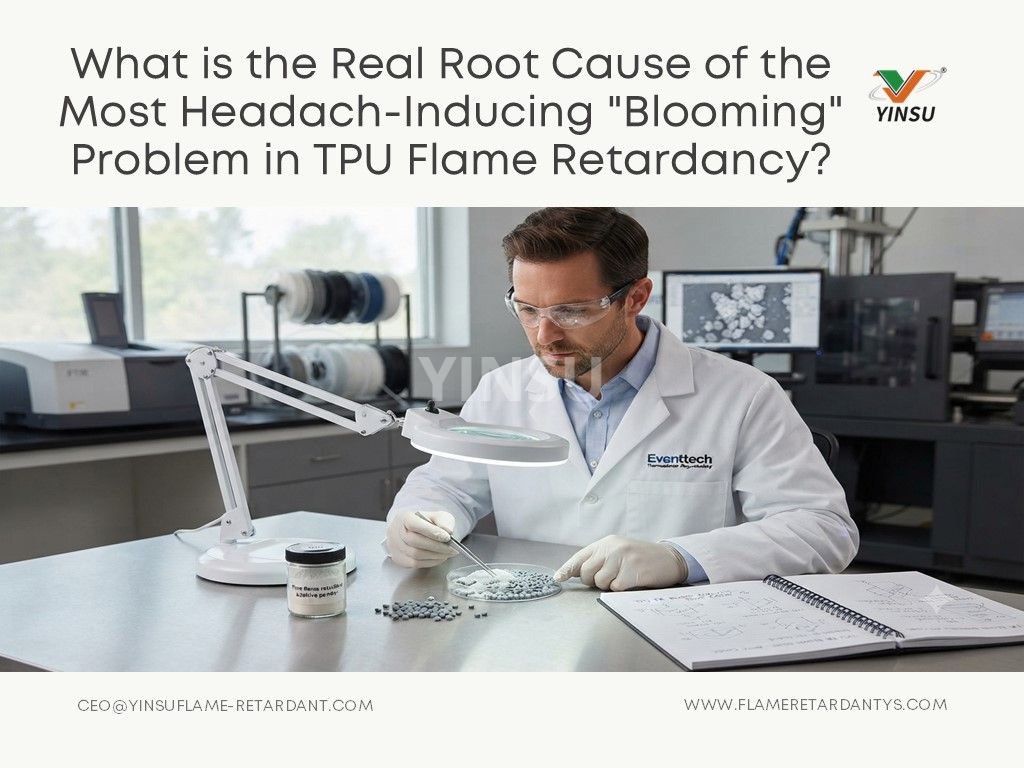
The whitening that occurs on the surface of flame-retardant TPU products is caused by poor compatibility between low-molecular-weight flame retardants and the base material, leading to migration and leaching. Hydrolysis of polyester-based TPU, excessively high processing temperatures, or high-temperature storage environments can all accelerate this process. Using coated flame-retardant masterbatches can effectively block the migration pathway, thereby resolving the blooming issue at its source.
Why is TPE flame retardancy so challenging? Flammable plasticizers, inconsistent mechanisms across multiphase components, and flame retardant migration—seven pain points explained in one go. Understand the key criteria for selecting TPE/TPU flame retardants and avoid common pitfalls such as wire bloom, surface whitening, and processing difficulties.
