Wire & Cable Flame Retardant Solutions


Specialized in PE, PVC, TPE, TPU and Low Smoke Zero Halogen (LSZH) wire and cable compound and materials.

In high-rise buildings, subway tunnels, new energy power stations and industrial complex scenarios, the fire safety of wires and cables is directly related to life and property and system reliability.
YINSU Flame Retardant Company provides customized flame retardant solutions for global customers, covering PE (polyethylene), PVC (polyvinyl chloride), TPE (thermoplastic elastomer), TPU (thermoplastic polyurethane) and LSZH (low smoke and halogen free) wire and cable systems to meet all safety requirements, ranging from UL94 V-0 flame retardant certification to EN 45545 fire protection for rail transportation and IEC 60754 low smoke and halogen free toxicity. All-round safety requirements.


Material Common             Use                                                                  Typical FR Type                                                           YINSU Flame Retardant Item No.
PE                                 HDPE, LDPE, LLDPE,                                  Red phosphorus, halogen free FR,                           PRP-950X, PE-XT-20, YS-F22B, MCA-B

                                     Cross-linked PE cables,                              Bromine antimony masterbatch                                                          MDH, ATH

                                     Plastic insulated cables.   
PVC                              PVC &Plastic insulated power cables,             T3 / ATO alternatives                                                                        T3,
T30

                                     Aluminum stranded wires, 

                                     Prefabricated branch cables. 
TPE                              Insulated wires, flexible cables                     Organic phosphorus                                                                  YS-F22B, YS-9003

                                    Shielded insulated cables 

TPU                            Special purpose cables                                            Organic phosphorus                                                                     YS-F22B, YS-9003

                                        Power cables for frequency converters.

Others                                                                                                 Welcome to consult more details.

​​​​​​​

halogen free Flame Retardant

If you want to know more about the halogen free Flame Retardant, the following articles will give you some help. These news is the latest market situation, trend in development, or related tips of the halogen free Flame Retardant industry. More news about halogen free Flame Retardant, are being released. Follow us / contact us for more halogen free Flame Retardant information!
  • From the Global Layout of Chemical Giants, Key Future Development Directions for TPU
    The future of TPU, as shaped by global chemical giants, focuses on high-performance applications like supercritical foaming, fiber composites, halogen-free flame retardancy for EVs, automotive PPF, and bio-based sustainable solutions.   Read More>
  • Research and Analysis on Thermal Diffusion Protection Methods for Power Batteries—Insulation and Flame-Retardant Materials
    Analyze cutting-edge methods to prevent thermal propagation in EV batteries through innovative materials like aerogels and ceramic fibers, ensuring enhanced safety and performance.   Read More>
  • Brief Analysis of the Unique Characteristics and Technical Challenges in Flame Retardant Nylon
    In the field of flame-retardant modification for high-temperature nylon materials, Silverplast Flame Retardant leverages its extensive technical expertise and innovative spirit to provide customers with a range of high-performance, eco-friendly flame-retardant solutions. Our modified organophosphorus flame retardants are specifically engineered for high-temperature applications, offering exceptional resistance to thermal decomposition and yellowing. This ensures material stability and aesthetic integrity under extreme processing conditions. Furthermore, our products strictly comply with international environmental standards such as RoHS and REACH, supporting customers in achieving their sustainability goals.   Read More>
  • How To Select High-Temperature Nylon Modification Additives?
    In the field of flame-retardant modification for high-temperature nylon, Yinsu Flame Retardant has emerged as an industry leader through innovative technology and exceptional products. Recognizing the critical role of high-temperature nylon in high-end applications such as electronics, automotive, and aerospace, we are committed to delivering efficient, eco-friendly, and stable flame-retardant solutions that meet the most stringent application requirements. Our red phosphorus masterbatch and modified organophosphorus flame retardants, specifically engineered for high-temperature nylon, deliver outstanding flame retardancy while maintaining stability in high-temperature processing environments. They exert minimal impact on material mechanical properties. Processed through specialized techniques, these products ensure excellent dispersion and compatibility during processing and use, effectively preventing migration and surface defects to enhance overall product quality.   Read More>
  • Flame-Retardant High-Temperature Nylon Industry: Huge Market Potential, Pioneering New Revolution in Materials Science
    The global flame retardant high-temperature nylon market is growing steadily, fueled by strict safety regulations and expanding applications in electronics, automotive, and aerospace sectors. Asia-Pacific leads in market volume, while North America and Europe emphasize eco-friendly and sustainable solutions. In response, Yinsu Flame Retardant Company provides innovative halogen-free products, including: - Red Phosphorus Flame Retardants: High efficiency, low dosage, and excellent electrical properties. - Organic Phosphorus Flame Retardant PAADP-20: Withstands temperatures up to 380°C, resists yellowing, and ensures long-term reliability.   Read More>
  • Beyond Shrinking: Solving Common Challenges in Flame Retardant Heat Shrink Tubing Formulation
    Let’s tackles core challenges in flame retardant heat shrink tubing formulation—balancing mechanical strength/electrical insulation, processing efficiency, RoHS/REACH compliance, and cost—for manufacturers. It spotlights YINSU’s solutions: high-efficiency options like FRP-950X encapsulated red phosphorus (achieving UL VW-1 compliance at 5–10wt% loading), surface-modified fillers, synergistic FR systems, and custom blends. A real EVA tubing case study shows 25% raw material cost cuts and 20% margin gains, helping engineers eliminate formulation trade-offs for high-performance, market-ready products.   Read More>
  • Choosing the Right Flame Retardant Heat Shrink: A Guide to Types, Standards, and Material Science
    This guide equips engineers and industry pros to select optimal flame retardant heat shrink tubing for high-stakes uses like NEV wiring and data centers. It dives into polymer types, halogen-free flame retardants (HFFR) mechanisms, and critical standards (UL VW-1, IEC 60695). Highlighting YINSU’s FRP-950X encapsulated red phosphorus—with low smoke/toxicity, stable processability, and RoHS/REACH compliance—it simplifies choosing safe, regulatory-aligned solutions to boost performance and safety.   Read More>
  • ​Formulation Design And Performance Considerations for Heat Shrink Tubing
    Unpacks key considerations for flame retardant heat shrink tubing formulation—a complex process balancing fire performance, mechanical strength, processability, and regulatory compliance. It highlights challenges like high additive loadings (e.g., ATH/MDH) harming tensile/elongation, and how compatibilizers (e.g., EBM terpolymer) mitigate this. It also covers processing needs (uniform additive dispersion, maintaining shrinkage stability) and critical regulatory shifts: RoHS/REACH compliance driving halogen-free adoption, and demand for low-smoke zero-halogen (LSZH) materials for enclosed spaces. For engineers/manufacturers, it’s a guide to optimizing formulations for performance, safety, and global standards.   Read More>
  • Total 17 pages  Go to Page
  • Go
Home » News
Red Phosphorus FR
4.12_576_576.png
Red Phosphorus + Synergist: Can 1+1 Really Be Greater Than 2?
2026/04/12

Red phosphorus flame retardants are highly efficient, but relying on them alone can lead to issues such as degraded physical properties, color limitations, and cost fluctuations. Synergistic compounding, through optimized combinations, can reduce the amount of red phosphorus while maintaining a V0 flame retardancy rating, thereby improving the surface quality and mechanical properties of the end product. Yinsu Flame Retardants, drawing on application scenarios such as glass fiber reinforced nylon and cables, analyzes the key matching principles and practical effects of combining red phosphorus with nitrogen-based, phosphorus-nitrogen, and inorganic synergists. This is suitable for formulation engineers looking to enhance the overall performance and flexibility of flame retardant solutions through compounding.

Red Phosphorus FR
12.jpg
How To Reduce The Issue of Flame Retardant Migration?
2026/04/04

Flame retardant migration is not simply a matter of physical migration, but a complex process determined by chemical structure, interaction forces with the substrate, and environmental factors. For red phosphorus flame retardants, the density of the coating process and compatibility with the substrate are key factors determining whether migration occurs during long-term use. This article is suitable for materials engineers and formulation R&D personnel seeking a deeper understanding of the core principles behind flame retardant stability.

Red Phosphorus FR
nylon1.jpg
Red phosphorus can only be used for black products? Encapsulation technology begs to differ.
2026/03/31

Red phosphorus flame retardants are highly favored for their excellent flame-retardant efficiency, but their characteristics such as high hygroscopicity and tendency for spontaneous combustion have limited their application in light-colored products. Through microencapsulation technologies such as vacuum coating, their compatibility and processing safety can be effectively improved, enabling red phosphorus to be stably used in light-colored engineering plastics, thereby offering greater design flexibility for high-performance halogen-free flame-retardant materials.

Industry News
PA6 Chips Price Forecast Trend Chart.jpg
Cost Fluctuations and Supply-Demand Game: PA6 Market in April Prone to Rise but Resistant to Fall
2026/03/30

Costs keep fluctuating while supply and demand quietly jostle for position—why is the PA6 market in April “prone to rising but resistant to falling”? And how will flame retardant materials be affected?

Wire & Cable
Solving the TPU Flame Retardancy Challenge.jpg
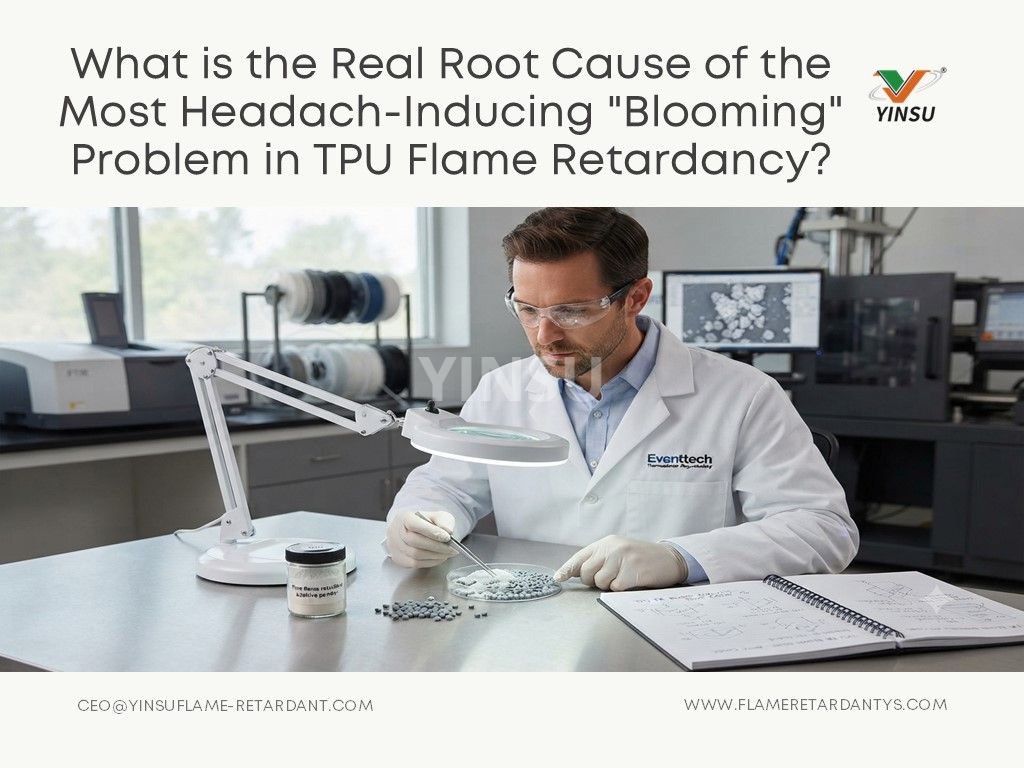
Solving the TPU Flame Retardancy Challenge: Inorganic Flame Retardants + Nano-Compositing — Achieving Both Physical Properties and Flame Retardancy
2026/03/25

How can TPU flame retardancy be improved without compromising its excellent physical properties? The combination of inorganic flame retardants and nano-compositing technology discussed in the article is one key approach, and expandable graphite, as a highly efficient synergistic flame retardant, is offering new possibilities for solving this challenge.

Industry News
Domestic Bromine Major Market Price Trend.jpg
Bromine Weekly Review: Strong Price Momentum, Uptrend Continues (Mar 13 to Mar 19, 2026)
2026/03/23

Bromine prices surged by RMB 6,500/ton in a single week, continuously intensifying cost pressures on downstream flame retardants. Multiple factors—including geopolitical tensions in the Middle East, low operating rates, and tightened imports—have driven the strong upward trend, with the industry focusing intensely on supply-side developments.

Fabrics & Textile Flame Retardant Solutions


Polyester (polyester fiber), as the world's largest synthetic fiber, has a limiting oxygen index (LOI) of only 20%-22%, which is flammable and accompanied by molten droplets and smoke when burning, seriously threatening the fire safety of textiles.

YINSU Flame Retardant provides a full range of polyester flame retardant solutions, covering fiber modification, drawing process, and fabric finishing, to help the products pass the global flame retardant standards such as GB 50222, EN 533, BS 5852, etc., and to meet the safety requirements in the fields of architectural interiors, apparel, and transportation.


Material                         Common Use                                                             Typical FR                                                        Type YINSU Flame Retardant Item No.
PE                      Construction safety net, geotextile,                       Red phosphorus, Organic phosphorus,                          PRP-950X, PE-XT-20, YS-F22B
                           woven bag, carpet, curtain, poncho, lawn               Bromine antimony masterbatch 
PP                      Nonwoven fabrics, automobile interior parts,     PPAP, Bromine antimony masterbatch                                  PPAP-15, T3, PPV2-6
                           safety nets, cable harness tubes, 
                           artificial turf, tents, etc. 
PET                    Curtains, safety nets, stringing pipes,                  Red phosphorus, phosphorus nitrogen FR,                               PET-55D, PET-70ZB
                           artificial wigs, geotextiles                                      Bromine + T3 / ATO alternatives  
Others                                                                                                Welcome to consult more details.

Fabrics & Textile Flame Retardant Solutions


Polyester (polyester fiber), as the world's largest synthetic fiber, has a limiting oxygen index (LOI) of only 20%-22%, which is flammable and accompanied by molten droplets and smoke when burning, seriously threatening the fire safety of textiles.

YINSU Flame Retardant provides a full range of polyester flame retardant solutions, covering fiber modification, drawing process, and fabric finishing, to help the products pass the global flame retardant standards such as GB 50222, EN 533, BS 5852, etc., and to meet the safety requirements in the fields of architectural interiors, apparel, and transportation.


Material                         Common Use                                                             Typical FR                                                        Type YINSU Flame Retardant Item No.
PE                      Construction safety net, geotextile,                       Red phosphorus, Organic phosphorus,                          PRP-950X, PE-XT-20, YS-F22B
                           woven bag, carpet, curtain, poncho, lawn               Bromine antimony masterbatch 
PP                      Nonwoven fabrics, automobile interior parts,     PPAP, Bromine antimony masterbatch                                  PPAP-15, T3, PPV2-6
                           safety nets, cable harness tubes, 
                           artificial turf, tents, etc. 
PET                    Curtains, safety nets, stringing pipes,                  Red phosphorus, phosphorus nitrogen FR,                               PET-55D, PET-70ZB
                           artificial wigs, geotextiles                                      Bromine + T3 / ATO alternatives  
Others                                                                                                Welcome to consult more details.
Yinsu flame retardant is a factory, focuses on manufacturing non halogen, low smoke and non-toxic flame retardants for various of applications. It develops different chemical and plastic additive.
 
Shipper: Guangzhou Winsilver Export Co., Ltd.
Office: No. 26, Kaitai Road, Huangpu District, Guangzhou City, Guangdong Province, China

Quick Links

Contact Us
Copyright 2022 Guangzhou Yinsu Flame Retardant New Material Co., Ltd. Technology by Leadong. Sitemap.