
- All
- Product Name
- Product Keyword
- Product Model
- Product Summary
- Product Description
- Multi Field Search

Views: 39 Author: Yinsu Flame Retardant Publish Time: 2025-12-11 Origin: www.flameretardantys.com


Ultra-Detailed Common Methods for Modified Plastic Composition Analysis
The structure of polymer materials determines their properties. By controlling and modifying the structure, polymer materials with different characteristics can be obtained. In order to understand the composition of purchased raw materials or reverse engineer the formulation of market materials, many modification factories' R&D laboratories need to analyze the composition of plastics. For reverse analysis of ordinary materials, enterprise technicians typically use macroscopic methods based on experience, such as burning with fire or biting with teeth, to make judgments. For some complex materials, professional experimental methods are usually required.
For composition analysis of complex materials, microspectral analysis methods are primarily employed, utilizing experiments such as GPC, XRD, infrared spectroscopy, mass spectrometry, etc. Through the five major steps of evaluation, pretreatment, instrument analysis, spectral library matching, and reverse analysis, accurate spectral information can be obtained. This information, combined with extensive development experience, can help R&D personnel reconstruct the composition of plastic formulations.
Today, we have compiled several commonly used experimental methods for modified plastic composition and structure analysis. When you encounter unfamiliar materials, you will no longer be confused! (Due to the variety of experimental methods and limited article length, this article only lists some common methods.)


I. GPC—Molecular Weight and Its Distribution
Basic Principles:
GPC is a special type of liquid chromatography. The instrument used is essentially a high-performance liquid chromatography (HPLC) system, mainly configured with an infusion pump, injector, chromatography column, concentration detector, and computer data processing system.
This experimental method is primarily used in the polymer field, with organic solvents as the mobile phase (e.g., chloroform, THF, DMF). Common stationary phase fillers include styrene-divinylbenzene copolymers.
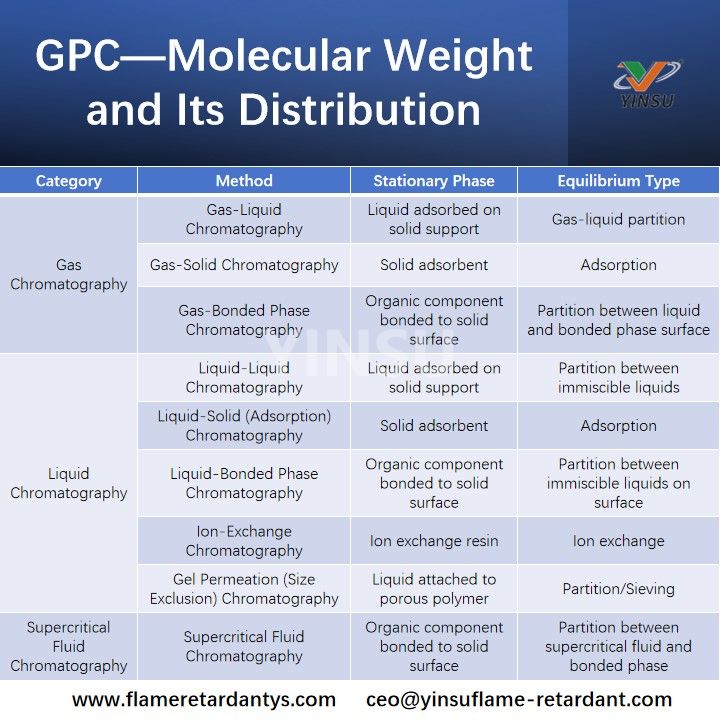
The most obvious difference from HPLC lies in the type (nature) of the chromatography columns used. HPLC separates molecules based on the affinity between various molecules in the sample and the filler in the column, while GPC separation is mainly governed by the volume exclusion mechanism.
When the analyzed sample enters the column with the mobile phase at a constant flow rate via the infusion pump, larger polymer molecules with volumes exceeding the gel pore size are excluded from penetrating the gel pores and can only flow between the gel particles, eluting first from the column with the smallest elution volume (or time). Medium-sized polymer molecules can penetrate some larger pores of the gel but not the smaller ones, eluting slightly later with a slightly larger elution volume. Much smaller polymer molecules with volumes smaller than the gel pore size can fully penetrate the gel pores, eluting last from the column with the largest elution volume.
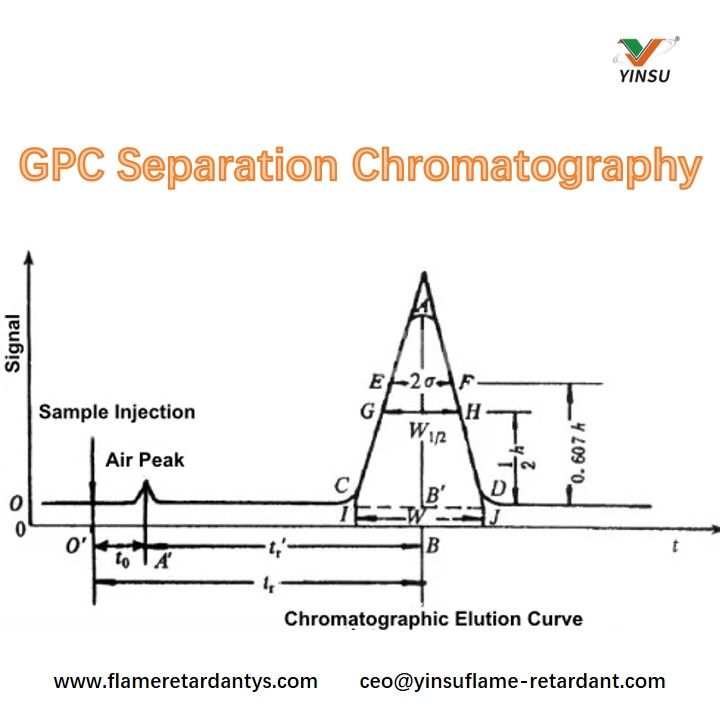
Therefore, the elution volume of polymers is related to the volume of the polymer molecules, i.e., the molecular weight. The larger the molecular weight, the smaller the elution volume. The separated polymers are continuously eluted from the column in order of decreasing molecular weight and enter the concentration detector.
Standards:
Polystyrene (PS, soluble in various organic solvents).
Poly(methyl methacrylate) (PMMA).
Poly(ethylene oxide) (PEO, also known as polyoxyethylene, soluble in water). Polyethylene glycol (PEG, soluble in water).
PEO and PEG have the same carbon chain backbone, but their synthesis materials and end groups differ. Due to the properties of the raw materials, the molecular weight and structure of their products vary. PEO often refers to poly(ethylene oxide) with one end methyl-capped and the other end hydroxyl-capped, while PEG generally refers to polyethylene glycol with both ends hydroxyl-capped.
e.g., Changes in molecular weight distribution of styrene-butadiene rubber during plasticization:
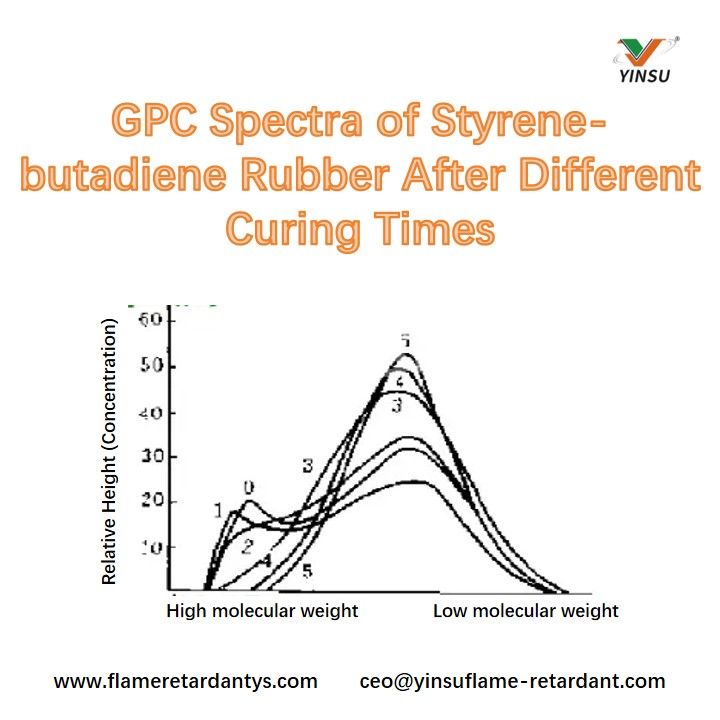
Samples were taken at regular intervals during plasticization for analysis. The results are shown in the figure. As time increases, the cleavage of high molecular weight components increases, and the GPC curve shifts toward lower molecular weights. After 25 minutes, the high molecular weight components almost completely disappear. If the purpose of plasticization is to eliminate these components, then 25 minutes is sufficient. GPC data can help workers determine the plasticization time.
II. Infrared Spectroscopy—Functional Groups, Chemical Composition
1. Basic Principles:
Spectral analysis is a method to identify substances and determine their chemical composition, structure, or relative content based on their spectra. According to the analysis principles, spectral techniques are mainly divided into absorption spectroscopy, emission spectroscopy, and scattering spectroscopy. Based on the state of the measured substance, spectral techniques are primarily classified into atomic spectroscopy and molecular spectroscopy. Infrared spectroscopy belongs to molecular spectroscopy, with infrared emission and infrared absorption spectroscopy as two types, and infrared absorption spectroscopy is commonly used.

2. Applications in Polymer Material Research:
Analysis and identification of polymers
Polymers have complex types and spectra. Different substances have different structures, resulting in different corresponding spectra. Therefore, analysis results must be compared with standard spectra to obtain final results.
Measurement of polymer crystallinity
Since fully crystalline polymer samples are difficult to obtain, infrared absorption spectroscopy alone cannot independently measure the absolute amount of crystallinity and requires combined results from other testing methods.
For example, X-ray diffraction, density method, DSC, nuclear magnetic resonance (NMR) absorption, etc.

III. Ultraviolet Spectroscopy—Identification, Impurity Testing, and Quantitative Determination
Basic Principles:
When light irradiates sample molecules or atoms, outer electrons absorb ultraviolet light of specific wavelengths, transitioning from the ground state to the excited state, producing a spectrum. The wavelength range of ultraviolet light is 10-400 nm. Wavelengths in the 10-200 nm range are called far-ultraviolet light, while wavelengths in the 200-400 nm range are near-ultraviolet light. For material structure characterization, the focus is mainly in the ultraviolet-visible wavelength range, i.e., 200-800 nm.
Qualitative analysis:
Particularly suitable for identifying conjugated systems, inferring the skeletal structure of unknown substances, and can be used in combination with infrared spectroscopy, nuclear magnetic resonance spectroscopy, etc., for qualitative identification and structural analysis. Qualitative testing is performed by comparing absorption spectrum curves and the relationship of maximum absorption wavelengths.

Measurement of polymer crystallinity
Since fully crystalline polymer samples are difficult to obtain, infrared absorption spectroscopy alone cannot independently measure the absolute amount of crystallinity and requires combined results from other testing methods.
For example, X-ray diffraction, density method, DSC, nuclear magnetic resonance (NMR) absorption, etc.

IV. Mass Spectrometry Testing
1. Basic Principles:
Mass spectrometry is a specialized technique widely used in various fields to identify compounds by preparing, separating, and detecting gas-phase ions. Mass spectrometry provides rich structural information in a single analysis. The combination of separation techniques with mass spectrometry is a breakthrough in separation science. Among numerous analytical testing methods, mass spectrometry is considered a universal method with high specificity and sensitivity, and it is widely applied. Mass spectrometry is a convenient and reliable method for providing the molecular weight and chemical formula of organic compounds, as well as an important means for identifying organic compounds.
After vaporization, the sample gas molecules enter the ionization chamber. One end of the ionization chamber is equipped with a cathode filament, which produces an electron beam when electrified. Under the impact of the electron beam, molecules lose electrons, dissociate into ions, and are further broken into fragment ions of different mass numbers with charges. Such an ion source is the most commonly used in mass spectrometers and is called an "electron impact ion source."
2. Applications in Polymer Materials:
Analysis of monomers, intermediates, and additives in polymer materials
As shown in the mass spectrum below, it can be determined that the unknown molecule contains one carboxyl group and one methyl group, and the remaining part can only be -CO2 or -C3H4. However, the latter is more likely.

Characterization of polymers
Each polymer compound has a different molecular formula and molecular structure. The mass spectrum is like the "identity card" of the polymer material. Based on its mass spectrum, it can be determined which polymer material it is.

V. X-Ray Diffraction (XRD)—Determining Polymer Crystallinity
1. Basic Principles:
X-rays are a type of electromagnetic radiation with very short wavelengths (approximately 10-8 to 10-12 meters), between ultraviolet and gamma rays. They were discovered by the German physicist Röntgen in 1895. X-rays can penetrate materials of certain thicknesses and can cause fluorescent substances to luminesce, photographic emulsions to sensitize, and gases to ionize.
2. Applications of XRD:
This section will focus on the application or calculation of XRD in polymer crystallinity.
The formulas for calculating the crystallinity of natural cellulose include the following four:
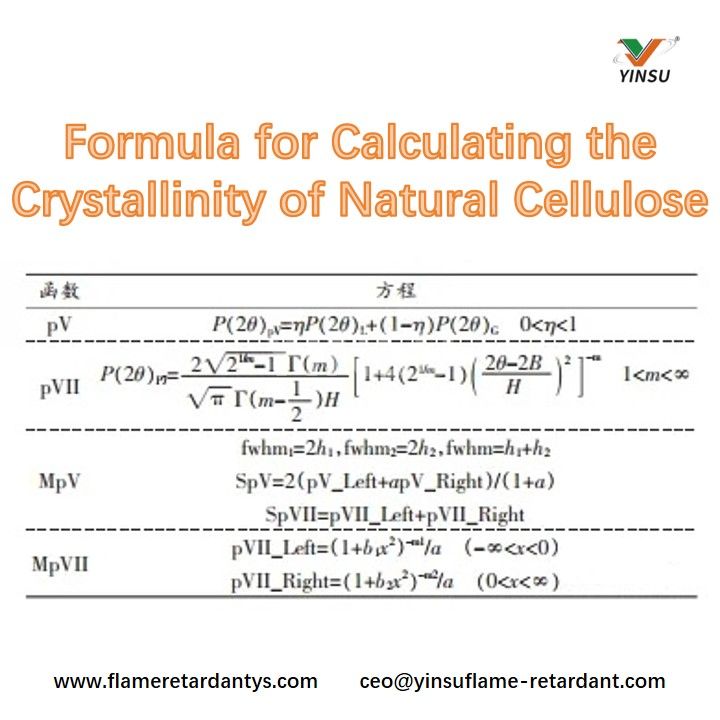
Based on the figure below, it can be seen that the four diffraction crystal planes of natural cellulose have large half-peak widths, high overlap of diffraction peaks, and significant overlap between crystalline and amorphous phases, making it difficult to locate the amorphous peak.

VI. Small-Angle X-Ray Scattering (SAXS)—Arrangement of Crystals at the Atomic Scale
1. Basic Principles:
Atoms in a crystal are forced to vibrate under the action of incident X-rays, forming a new X-ray source that emits secondary X-rays.
If the irradiated sample has a non-periodic structure with different electron densities, the secondary X-rays will not interfere, a phenomenon known as diffuse X-ray scattering. X-ray scattering needs to be measured at small angles, hence it is called small-angle X-ray scattering.
2. Sample Preparation Requirements:
Bulk samples: If the bulk sample is too thick for the beam to pass through, it must be thinned.
Film samples: If the film sample is not thick enough, several identical samples can be stacked together for testing.
Powder samples: Powder samples should be ground until no granular feel is present. During testing, they need to be wrapped in very thin aluminum foil (carrier) or uniformly mixed into collodion to prepare a sheet sample of appropriate thickness.
Fiber samples: For fiber samples, they should be cut into pieces as much as possible and prepared like powder samples.
Granular samples: For coarse granular samples that cannot be ground, preparation is more troublesome. One method is to cut the granules into thin slices of the same thickness and arrange them neatly on tape. Another method is to melt or dissolve the granules to prepare sheet samples, but this must not destroy the original structure of the sample.
Liquid samples: Solution samples must be injected into capillary tubes for testing. When preparing solutions, note: 1. The solute must completely dissolve in the solvent, i.e., no precipitation. 2. The electron density difference between the solute and solvent should be as large as possible.
3. Applications in Polymer Materials:
Small-angle X-ray scattering phenomena arecommon present in natural and synthetic polymers, with many different characteristics. The applications of small-angle X-ray scattering in polymers mainly include the following aspects:
Determining the shape, particle size, and size distribution of particles in polymer gels through Guinier scattering.
Studying crystal grains in crystalline polymers, microdomains (including dispersed and continuous phases) in polymer blends, and the shape, size, and distribution of voids and cracks in polymers through Guinier scattering.
Investigating the orientation, thickness, crystallization percentage, and thickness of amorphous layers of lamellar crystals in polymer systems through long-period measurements.
Molecular motion and phase transitions in polymer systems.
Studying the correlation length, interface layer thickness, and total surface area of multiphase polymer systems using the Porod-Debye correlation function method.
Determining the molecular weight of polymers through absolute intensity measurements.

From infrared spectroscopy to DSC, from thermogravimetry to elemental analysis, the "physical examination items" for modified plastics are continuously upgraded with the complexity of formulations. The more precise the testing methods, the more they enable every gram of flame retardant and every particle of filler to exert their maximum value during processing. The ultimate goal of composition analysis is always to pave the way for the next iteration of materials with higher performance and lower cost.


