
- All
- Product Name
- Product Keyword
- Product Model
- Product Summary
- Product Description
- Multi Field Search

Specialized in PE, PVC, TPE, TPU and Low Smoke Zero Halogen (LSZH) wire and cable compound and materials.
In high-rise buildings, subway tunnels, new energy power stations and industrial complex scenarios, the fire safety of wires and cables is directly related to life and property and system reliability.
YINSU Flame Retardant Company provides customized flame retardant solutions for global customers, covering PE (polyethylene), PVC (polyvinyl chloride), TPE (thermoplastic elastomer), TPU (thermoplastic polyurethane) and LSZH (low smoke and halogen free) wire and cable systems to meet all safety requirements, ranging from UL94 V-0 flame retardant certification to EN 45545 fire protection for rail transportation and IEC 60754 low smoke and halogen free toxicity. All-round safety requirements.
Material Common Use Typical FR Type YINSU Flame Retardant Item No.
PE HDPE, LDPE, LLDPE, Red phosphorus, halogen free FR, PRP-950X, PE-XT-20, B-HFFR, MCA-B, WADP-10
Cross-linked PE cables, Bromine antimony masterbatch FR-ML-01, K100
Plastic insulated cables.
PVC PVC &Plastic insulated power cables, ATO alternatives T3, T30, FRP-950X, K100, ZHS, ZS, ZSB-A
Aluminum stranded wires, Zinc stannate
Prefabricated branch cables.
TPE Insulated wires, flexible cables Organic phosphorus MCA-B, WADP-10, FRP-950X, 95-MC
Shielded insulated cables
TPU Special purpose cables Organic phosphorus MCA-B, WADP-10, FRP-950X, 95-MC
Power cables for frequency converters.
Others Welcome to consult more details.
![[Weekly Bromine Review]: Supply-Demand Dynamics Drive Prices Lower (August 21–27, 2026)](http://ikrorwxhnnrili5q-static.micyjz.com/cloud/prBprKkqlrSRmlpimlljjp/0901-Brominated-flame-retardants-yinsu-flame-retardant-halogen-free.jpg)
![[Weekly Bromine Review]: Bullish Sentiment Prevails; Trading Volume Continues to Rise (July 17–24, 2026)](http://ikrorwxhnnrili5q-static.micyjz.com/cloud/pmBprKkqlrSRplrlkmnqjq/0727-xiusuyin_714_640.png)



![[Yellow Phosphorus & Phosphorus-Containing Intermediates Weekly Review]: High-Price Transmission Stagnant, Market Center of Gravity Declines (May 15-21, 2026)](http://ikrorwxhnnrili5q-static.micyjz.com/cloud/ppBprKkqlrSRqljknrlljo/Yellow-Phosphorus-Phosphorus-Containing-Intermediates-Weekly-Review-High-Price-Transmission-Stagnant.png)
Bromine fell by 1,750 yuan per metric ton during the week to 37,750 yuan per metric ton, a decline of 4.6 percent. Downstream buyers were strongly pushing for lower prices, causing transaction prices to trend downward. While cost support for bromine-based flame retardants has weakened, the impact has been slow to materialize. Combined with the traditional off-season for demand, the flame retardant market is under short-term pressure and is trading on a weak note.
Bromine prices rose by 1,500 yuan per metric ton for the week, and cost pressures on bromine-based flame retardants continue to mount. With tight supply and manufacturers holding back on sales, prices are more likely to rise than fall in the short term; downstream companies should focus on managing their procurement schedules and evaluating halogen-free alternatives.
As yellow phosphorus prices navigate a period of post-decline volatility, our latest market analysis explores how shifting raw material costs are triggering a critical industry 'shakedown' for downstream phosphorus-based flame retardants.
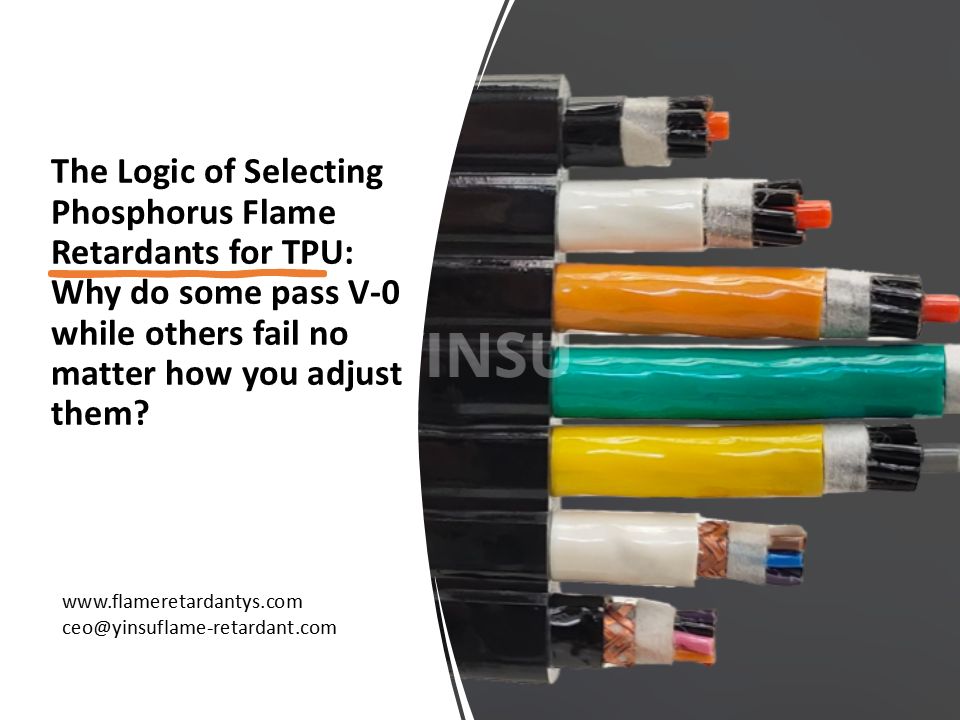
When selecting PU phosphorus-based flame retardants, the key consideration is not the dosage but rather the compatibility between the decomposition temperature and the substrate. This article analyzes the differences in applicability among the three major systems—APP-based, organophosphorus, and red phosphorus—as well as key technical aspects such as migration and leaching, and intumescent flame retardancy.
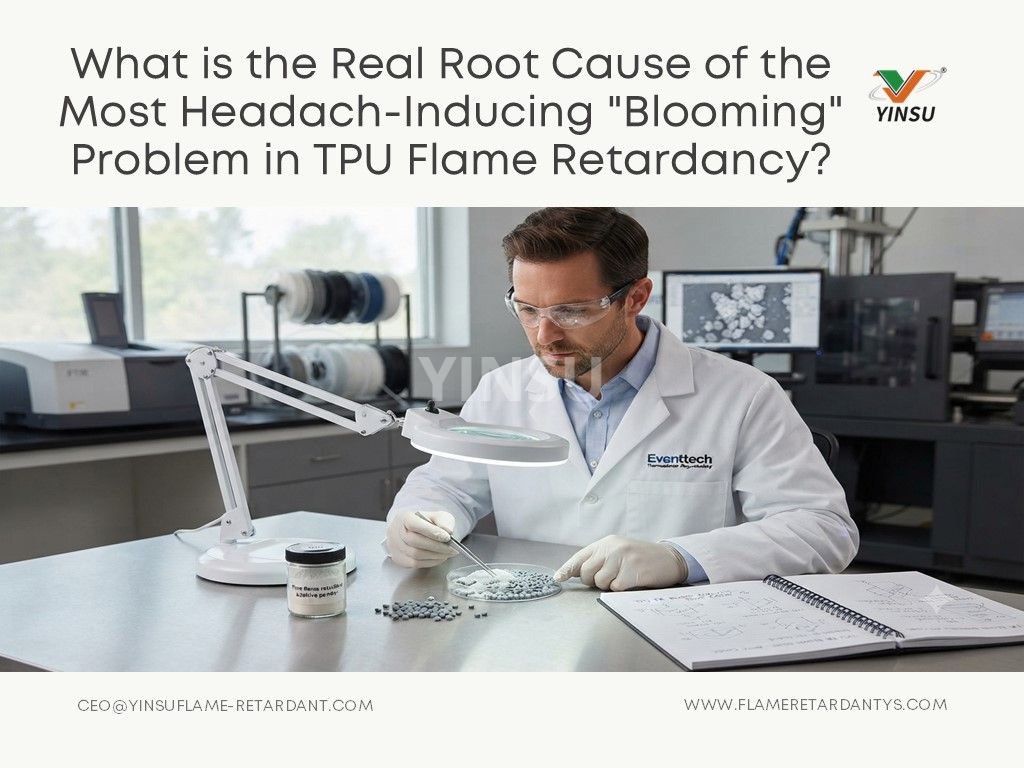
The whitening that occurs on the surface of flame-retardant TPU products is caused by poor compatibility between low-molecular-weight flame retardants and the base material, leading to migration and leaching. Hydrolysis of polyester-based TPU, excessively high processing temperatures, or high-temperature storage environments can all accelerate this process. Using coated flame-retardant masterbatches can effectively block the migration pathway, thereby resolving the blooming issue at its source.
Why does the flame retardancy of recycled PVC boards fluctuate wildly between V-0 and V-2 during processing? To address the "thermal history" damage of regrind, YINSU Flame Retardant offers highly heat-stable composite antimony solutions that secure consistent UL94 V-0 ratings while boosting mechanical retention by 30% and driving significant cost optimization.
