Weekly Review of Yellow Phosphorus and Phosphorus-based Intermediates:
Prices Rebound After Decline (20260710-0716)
I. Market Logic
① Yellow phosphorus enterprises are generally reluctant to sell at low prices, causing the market price center to gradually shift upward.
② On the demand side, the thermal phosphoric acid industry remains steady while observing the market, while the phosphorus trichloride/oxychloride/glyphosate (the "Three Phosphorus Chemicals") industry continues to show weak production and sales.
③ During the wet season, electricity costs for the yellow phosphorus industry have decreased, though costs remain relatively high in the Guizhou region. Among auxiliary products, costs for coke and graphite electrodes are showing narrow fluctuations.
II. Analysis of Industry Chain Price Fluctuations This Week
Market Dynamics:
Although sulfur prices rose during the week, it did not boost the yellow phosphorus market, which is driven by its own supply and demand fundamentals. Regarding supply, enterprises still maintain about a 13% profit margin. Production in Yunnan and Sichuan remains stable, while some facilities in Guizhou have reduced loads due to higher electricity costs compared to the rest of the Southwest. As of the close, the market price range in Yunnan, Guizhou, and Sichuan was 26,000–26,400 RMB/ton.
Weekly Market Price Trend Chart for Yellow Phosphorus, 2025–2026 (Yuan/metric ton)
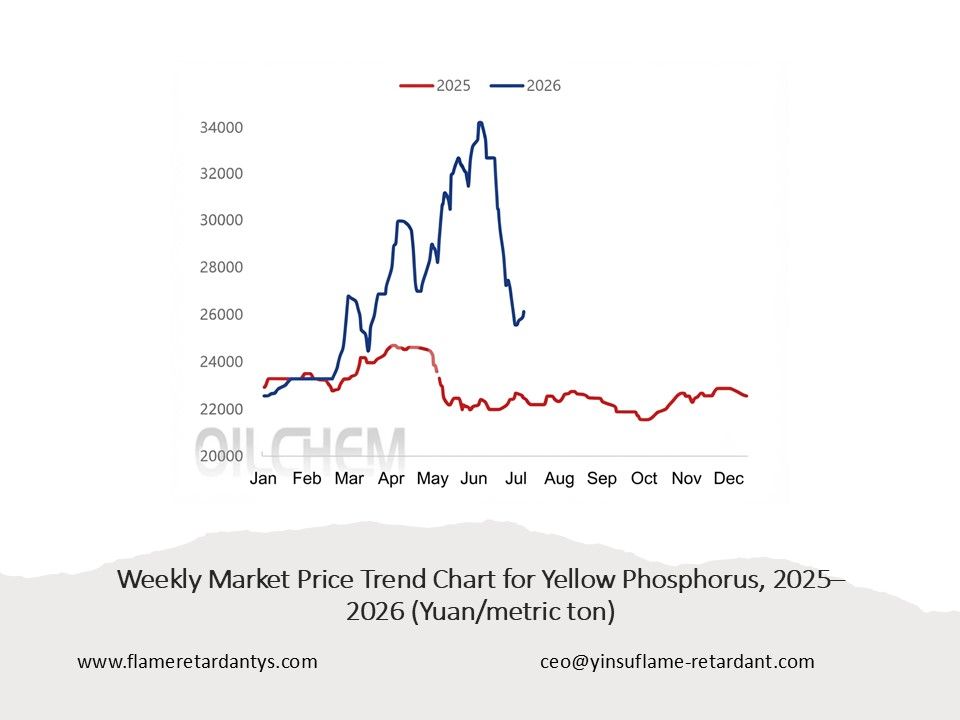
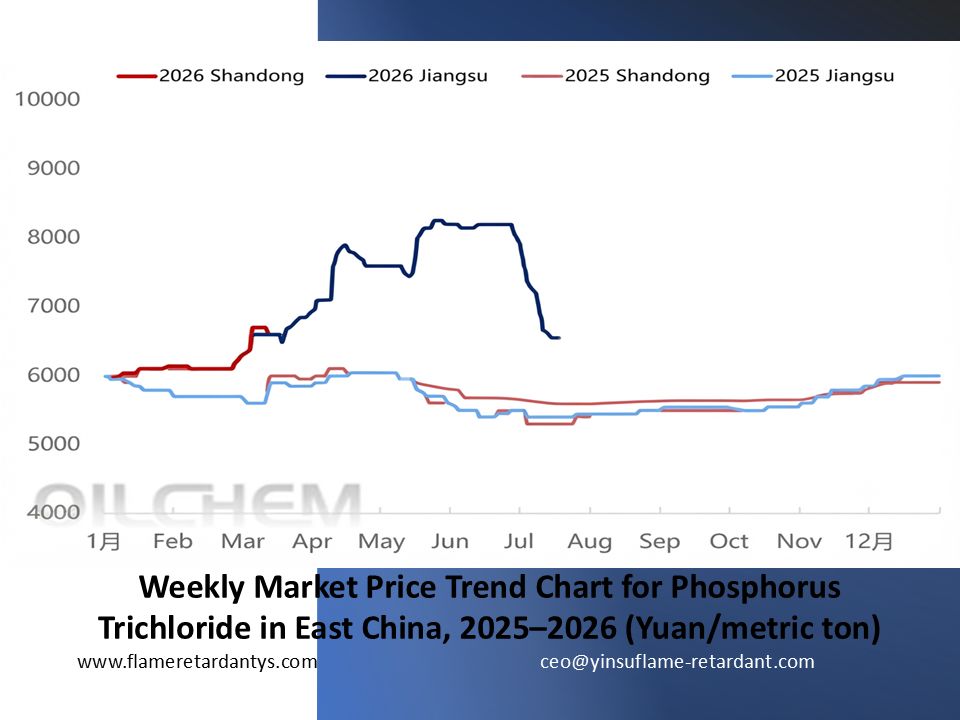
This week, the market price of yellow phosphorus fell by approximately 1.86% week-over-week, while the market price of liquid chlorine in Jiangsu dropped by 77% week-over-week. The raw material segment for the three chemical industries remained weak, and market prices continued to trend downward. Given the uncertainty surrounding the trend in yellow phosphorus prices, phosphorus trichloride manufacturers are adopting a wait-and-see approach, placing orders only to meet immediate needs at prices slightly below 26,000 yuan per metric ton. As the phosphorus trichloride market remains in its off-season, most companies continue to base production on sales, with reduced operating rates being common. Actual transactions are primarily negotiated based on market conditions. During the week, yellow phosphorus prices stabilized with a slight upward trend, causing phosphorus trichloride market prices to temporarily stabilize as well amid a wait-and-see attitude. At market close, the mainstream market price for phosphorus trichloride in Shandong and Jiangsu stood at 6,500–6,700 yuan per metric ton; the market price for phosphorus trioxide fluctuated in line with raw material prices, with the mainstream price in the Shandong market at 6,200–6,300 yuan per metric ton.
Thermal Phosphoric Acid :
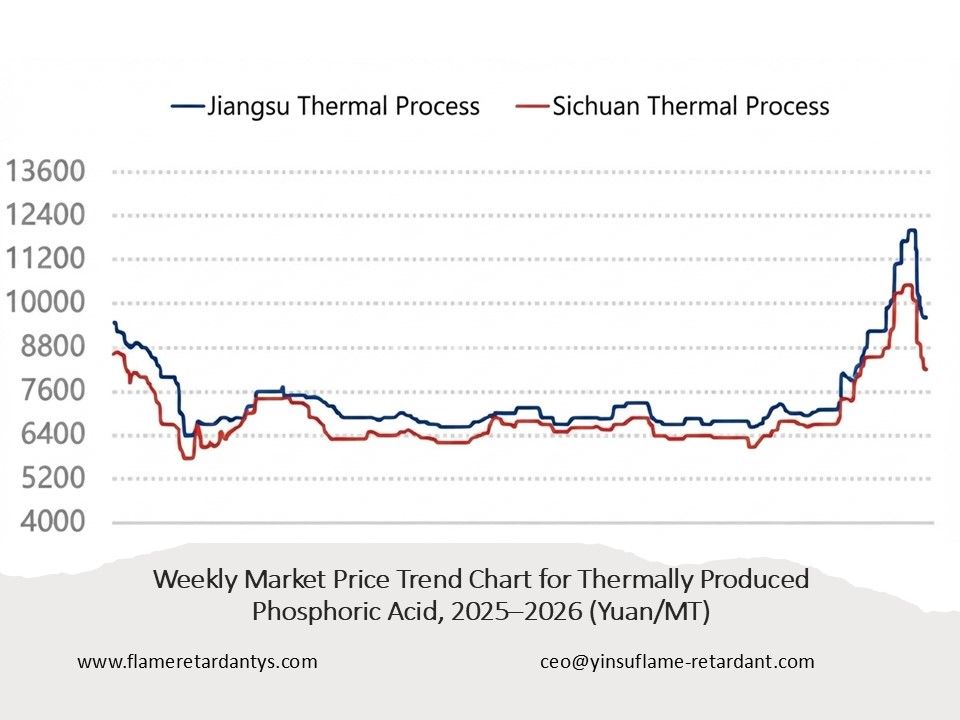
The thermal phosphoric acid market continued to trade weakly, with sluggish actual transaction volumes. Midweek, driven by a rebound in yellow phosphorus prices, thermal phosphoric acid prices in the Sichuan region rose slightly by 200 yuan/metric ton. However, downstream purchasing sentiment remained subdued, new orders were slow to materialize, and the price increase lacked sustained support. In the Jiangsu region, prices remained stable on the surface but saw hidden declines. Influenced by falling prices in surrounding areas and persistently weak demand, manufacturers were increasingly willing to offer discounts to move inventory, resulting in actual transaction prices below quoted levels. Overall, both supply and demand in the market remain weak, and inventory pressure persists. Prices are unlikely to show significant improvement in the short term; most companies are focusing on reducing inventory, and a strong sense of caution prevails. In Sichuan, ex-factory quoted prices for thermal-process phosphoric acid (acceptance bill) ranged from 8,500 to 8,600 yuan/metric ton, with actual transaction prices ranging from 7,900 to 8,100 yuan/metric ton; in Jiangsu, ex-factory quoted prices for purified thermal-process phosphoric acid (acceptance bill) ranged from 9,700 to 9,890 yuan/metric ton, with actual transaction prices negotiated on a case-by-case basis. For more details, please refer to Longzhong Information’s Weekly Phosphoric Acid Report.
Wet-Process Purified Phosphoric Acid :
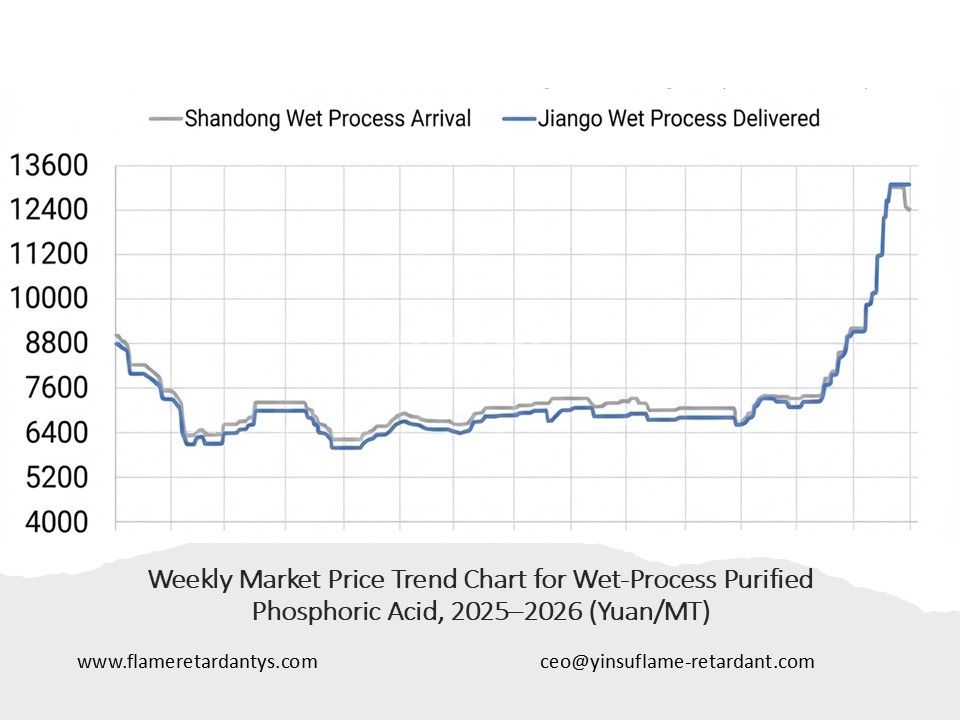
This week, the wet-process purified phosphoric acid market remained generally stable. Affected by a slight increase in sulfur prices, producers faced pressure on production costs, with some reducing operating capacity to limit losses. However, downstream procurement demand remained weak, new orders were limited, and market trading activity was subdued. Inventory pressure showed no significant relief, traders adopted a wait-and-see attitude, and room for price negotiation gradually widened, with actual transactions primarily consisting of small orders. The ex-factory reference price for wet-process purified phosphoric acid in Central China is 11,500 yuan/metric ton, with a reference ex-factory price range of 8,900–9,000 yuan/metric ton. For South China, the reference price for Yingkou-delivered goods is 9,800 yuan/metric ton, with actual transactions negotiated on a case-by-case basis. For more details, please refer to the Longzhong Information Weekly Phosphoric Acid Report.
III. Market Outlook
Yellow Phosphorus:
In terms of future supply for yellow phosphorus, driven by recent increases in market prices, the industry's average profit margin stands at approximately 13% based on calculations using current market prices and cost prices. With the exception of the Guizhou region—where some companies have reduced production due to high electricity costs—most companies are maintaining stable production schedules, and overall market supply remains relatively ample. On the demand side, demand from the thermal phosphoric acid industry remains subdued, with companies either holding prices or adopting a wait-and-see approach. As the chemical industry is in its off-season, production and sales prospects remain bleak.
Although the sulfur market has shown strength recently, this is not expected to have a significant positive impact on yellow phosphorus. In terms of pricing, following the earlier downtrend, corporate profits have been continuously squeezed. Furthermore, with major producers adjusting prices to boost sales volume this week and downstream buyers tending to purchase only when prices rise rather than when they fall, yellow phosphorus producers are not expected to be inclined to voluntarily reduce prices. They may continue to hold back sales at low prices. However, the industry's supply and demand remain out of balance. After recent restocking by downstream buyers, they are likely to focus on digesting the raw materials they have already procured. Overall, yellow phosphorus market prices are expected to fluctuate within a narrow range next week.
Views on Phosphorus-Based Flame Retardants:
The low price of yellow phosphorus is reshaping the cost dynamics and competitive landscape of downstream phosphorus-based flame retardants.
Cost Side: Profit margins are passively expanding, but the risk of price wars is rising.
Yellow phosphorus has fallen from its high this year to around 26,000 yuan per metric ton, leading to a significant decline in raw material costs for phosphorus-based flame retardants (such as ammonium polyphosphate (APP), red phosphorus masterbatch, and organic phosphorus flame retardants). In theory, this opens up profit margins for flame retardant manufacturers. However, it is worth noting that lower costs do not necessarily translate into profits; rather, they are more likely to trigger price competition. Currently, demand from downstream industries such as modified plastics, cables, and building materials remains weak, and buyers' bargaining power has strengthened. If flame retardant manufacturers cannot differentiate themselves through technology or service, they are likely to find themselves in a passive situation where "falling raw material prices lead to falling product prices."
Supply Side: Capacity expansion is accelerating, and risks of structural oversupply are emerging.
A major domestic conglomerate recently made a significant investment in a 200,000 metric tons per year flame-retardant-grade ammonium polyphosphate project, aiming to become the world’s largest producer. This signal warrants caution— when upstream phosphorous chemical giants expand production on a large scale into the downstream flame retardant sector, the survival space for small and medium-sized flame retardant manufacturers will be further squeezed. Although the halogen-free flame retardant market is growing, the pace at which new capacity is being brought online may temporarily outstrip the growth rate of demand, posing a risk of oversupply for certain product types.
Exports: The Southeast Asian market represents a definite source of growth, but competition is intensifying.
China's flame retardant exports are projected to reach 380,000 metric tons by 2025, with a compound annual growth rate of 18.2% over the past three years. India’s flame retardant industry faces a significant supply gap, and Chinese companies are poised to seize this opportunity. However, the export path is not without challenges—the impact of geopolitical and trade barriers is becoming apparent, and local flame retardant production capacity in Southeast Asia is gradually being established, meaning the window of opportunity may be shorter than anticipated.
The low price of yellow phosphorus does not represent a “windfall period” for phosphorus-based flame retardants, but rather a "reshuffling period."
Those who survive will not be the ones raising prices the fastest, but rather those with the strictest cost control and the most distinct product differentiation. For downstream users, this is indeed a window of opportunity to optimize flame retardant procurement costs, but when selecting suppliers, they must look beyond just the quoted price—production capacity stability, technical support capabilities, and long-term supply guarantees are more important than current low prices.


