
- All
- Product Name
- Product Keyword
- Product Model
- Product Summary
- Product Description
- Multi Field Search

Views: 39 Author: Yinsu Flame Retardant Publish Time: 2026-09-22 Origin: www.flameretardantys.com


Bull-Bear Standoff in the Melamine Market; Companies’ Offers Remain Largely Firm
(September 11–17, 2026)
1.Market Focus for This Week
1)Production: Weekly melamine output stood at 27,000 metric tons, down 3.57% from last week.
2)Raw Materials: The domestic urea market showed a volatile yet generally weak trend this week. As of Thursday, the mainstream ex-factory prices for small and medium-sized granules in Shandong ranged from 1,740 to 1,780 yuan per metric ton, with the average price down 30 yuan per metric ton from the previous week.
2.Market Analysis for This Week
Figure 1: Price Trend Chart for Major Domestic Melamine Markets (yuan/metric ton)
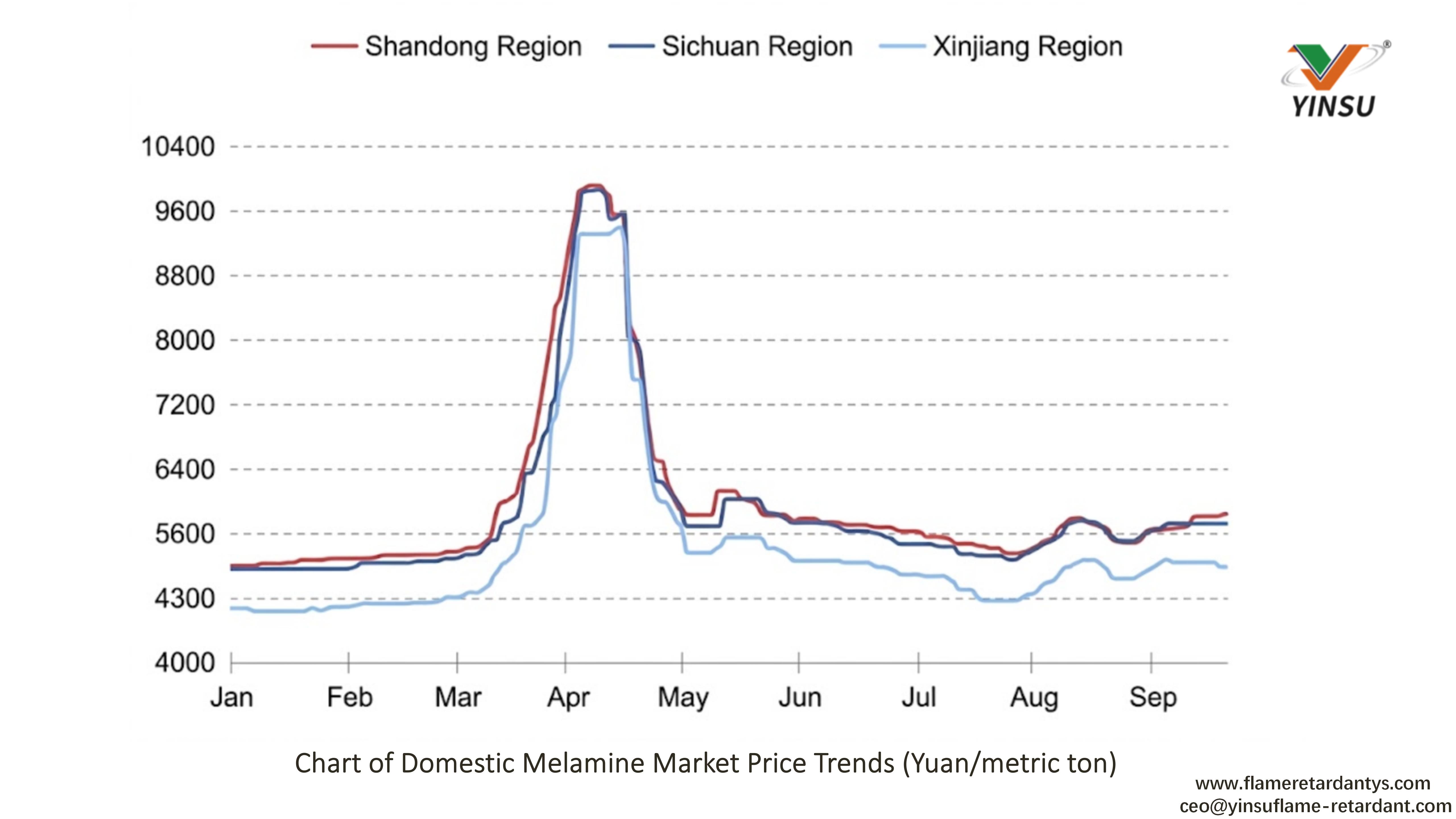
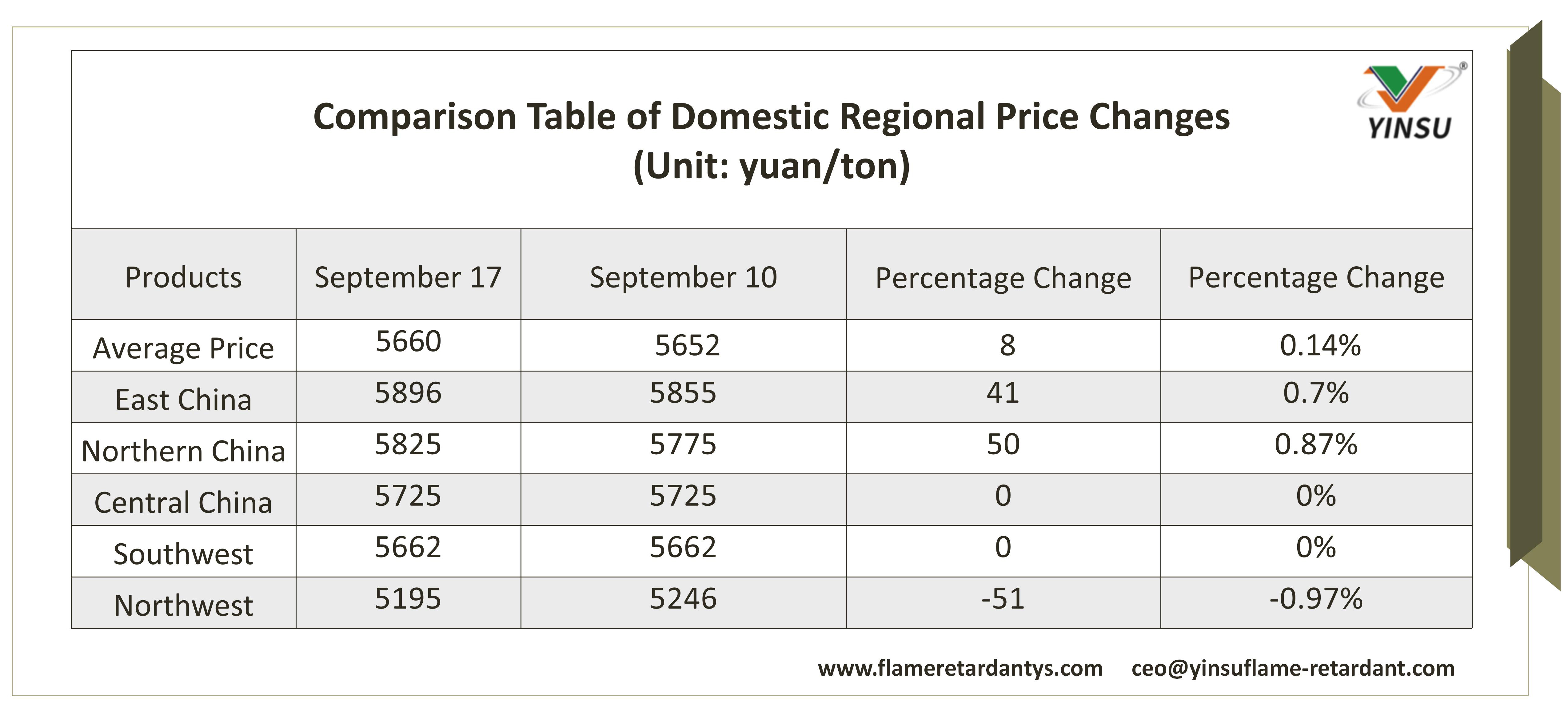
This week, the domestic melamine market fluctuated within a narrow range. As of Thursday, mainstream ex-factory quotes for atmospheric-pressure melamine in China were concentrated between 5,700 and 5,900 yuan per metric ton. On the supply side, production facilities in Shaanxi, Sichuan, Xinjiang, and other regions gradually shut down for maintenance during the week, causing the industry’s capacity utilization rate to drop below 50 percent—reaching a low for the year—which provided strong support for spot prices. On the demand side, overall downstream demand remained weak, with mid- and downstream players limiting purchases to essential needs only. This failed to provide substantial upward momentum for the market, leaving prices lacking significant drivers for a sharp rise. While there were numerous disruptions in the raw material and news markets, the supply-demand fundamentals remained loose. The volatile and fluctuating market conditions further intensified a wait-and-see sentiment in the melamine market, capping the upside potential for prices. Overall, this week’s market was characterized by a tug-of-war between bulls and bears, with companies holding divergent outlooks on future trends. Most adjusted prices flexibly based on their pending orders and inventory levels. Looking ahead to next week, with an industry conference imminent, the market is awaiting new guidance from the event. It is expected that the melamine market will remain firm in the short term, and companies will continue to adjust their quotes flexibly according to their respective order and inventory situations.
3. Analysis of Market Influencing Factors
1)During the week, one production unit at Shandong Hualu and one at Xinjiang Yuxiang resumed operations, while the large-scale facility at Sichuan Jinxiang, as well as facilities at Sichuan Yulong, Xinjiang Yihua, and Shaanxi Longhua, were shut down. Next week, the large-scale facility at Sichuan Jinxiang and the facility at Henan Tianqing are scheduled to resume operations. It is expected that the industry’s capacity utilization rate will fluctuate around the current level next week, with an average of approximately 48%.
2)A strong atmosphere of caution prevailed, with market participants showing moderate purchasing enthusiasm and entering the market primarily to meet immediate needs.
4. Market Forecast for Next Week
On the supply side, two companies are expected to resume production next week, while no companies have scheduled shutdowns for maintenance. As the industry’s capacity utilization rate is unlikely to rise significantly in the near term, the supply side remains supportive. On the demand side, acceptance of current price levels among mid- and downstream players remains weak; in the short term, only essential needs are being met, and market sentiment remains heavily wait-and-see. On the raw material side, the fundamentals for urea are becoming more relaxed. Coupled with the approaching National Day and Mid-Autumn Festival holidays, companies may lower prices in advance to secure pre-holiday orders, making prices prone to decline and weakening the support for melamine. Overall, the melamine market is primarily driven by supply-demand dynamics; companies may flexibly adjust prices based on their own shipment schedules while awaiting new guidance from industry meetings.
5. Impact and Forecast of Downstream Flame Retardants
Melamine is the core raw material for nitrogen-based flame retardants such as MCA (melamine cyanurate) and MPP (melamine polyphosphate), and its price trends directly affect the cost structure of halogen-free flame retardants. This week, the capacity utilization rate for melamine fell below 50%, hitting a year-to-date low, with mainstream quotes remaining firm at 5,700–5,900 yuan/metric ton, providing strong cost support for nitrogen-based flame retardants.
Cost Side: MCA/MPP prices are more likely to rise than fall in the short term. Tightening melamine supply, coupled with firm manufacturer quotes, continues to put pressure on the production costs of MCA and MPP. Even in the face of weak downstream demand, flame retardant manufacturers have limited room to proactively lower prices in the short term; some producers may respond to the dual pressures of high raw material costs and weak demand by reducing operating rates.
Demand Side: Downstream acceptance is weak, and price pass-through is hindered. Downstream industries for flame retardants—such as modified plastics, cables, and electronics—are also in their off-season, resulting in limited acceptance of high-priced flame retardants. The tug-of-war between firm melamine prices and downstream pressure to lower prices is squeezing flame retardant manufacturers’ profit margins from both ends.
Outlook for Next Week: As production resumes at facilities such as Sichuan Jinxiang and Henan Tianqing, the utilization rate of melamine production capacity may rebound slightly to around 48%, offering some relief from the supply tightness. However, weak urea prices and potential price reductions on pre-paid orders ahead of the two major holidays may weaken cost support for melamine. If melamine prices ease, cost pressures on MCA and MPP are expected to ease marginally, though it will take time for these changes to be passed on to the end-user market for flame retardants. In the short term, the nitrogen-based flame retardant market is likely to remain in a stalemate characterized by “firm costs, weak demand, and profit pressure.” Downstream users are advised to monitor the pace of melamine production resumption and new guidance released at industry conferences.


