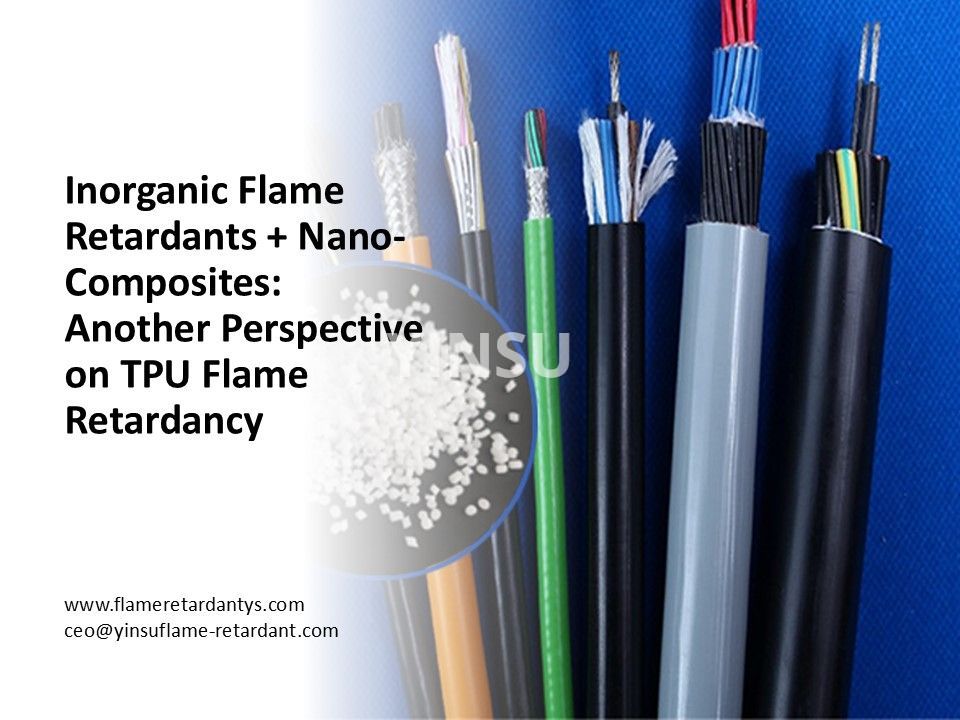
Inorganic Flame Retardants + Nano-Composites: Another Perspective on TPU Flame Retardancy
When optimizing TPU flame retardancy, most engineers immediately think of phosphorus-based systems. This is a logical choice, as phosphorus systems offer exceptional efficiency. However, a few years ago, a cable-manufacturing client approached me with a dilemma: he wanted to avoid phosphorus because his customers, while strict about halogen-free compliance, were highly price-sensitive. Phosphorus-based flame retardants carried a premium cost that made his commercial quotes uncompetitive. He asked if there was another viable route.
To be honest, I didn't have a definitive answer for him at the time. Traditional inorganic flame retardants usually require a massive loading level of 40–60% to pass a UL94 V-0 rating, which completely destroys the inherent flexibility of TPU. However, I kept analyzing this challenge.
Later, after reviewing advanced polymer research and conducting our own validation trials, my perspective shifted—the inorganic compounding route has been significantly underestimated in the industry.
The Inherent Challenge of Inorganic Flame Retardants
The trade-offs associated with inorganic flame retardants are well-documented.
Aluminium Hydroxide (ATH) and Magnesium Hydroxide (MDH) require high dosages and exhibit poor compatibility with the TPU matrix. When overloaded, tensile strength drops, elongation at break plunges, and the material becomes rigid. This is a critical failure point for cable jacket manufacturers; jackets must remain soft and elastomeric, but excessive inorganic loading transforms them into brittle plastics.
However, inorganic flame retardants possess one advantage that phosphorus systems cannot match: exceptional smoke suppression. While phosphorus systems are relatively low-smoke, ATH and MDH naturally minimize smoke density because they function by absorbing heat and releasing water vapor. For high-specification environments with strict smoke density mandates—such as subways, marine vessels, and confined public spaces—this property provides irreplaceable value.
The Solution: Minimizing Inorganic Loading via Nano-Composites
The strategy is not to abandon inorganics entirely, but to synergistically enhance lower dosages so they achieve high efficiency. This is precisely where nano-composites excel.
When clay minerals (such as montmorillonite) are exfoliated and dispersed within TPU at the nanoscale, their nano-layers form a tortuous "physical barrier" during combustion. This barrier prevents combustible gases from escaping while simultaneously blocking heat transfer inward. Industry data confirms that a formulation combining 18% nitrogen-phosphorus flame retardant with just 1% organic clay can achieve a Limiting Oxygen Index (LOI) of 32.8% and a secure V-0 rating. Crucially, the retention of mechanical properties is significantly better compared to standard formulas. The efficiency boost gained from a mere 1% nano-addition is remarkably profound.
Another additive gaining professional traction is Expandable Graphite (EG). This material begins intumescent expansion around 200°C, and its expansion volume can reach up to 280 times at 900°C. Upon expanding, it forms a low-density, worm-like carbonaceous char layer on the material's surface, effectively isolating the underlying polymer from heat and oxygen.
One specific testing dataset stands out: a TPU composite utilizing 20% EG combined with surface-modified $$\text{Mg(OH)}_$$ achieved an LOI of 30.6% and dramatically reduced the Peak Heat Release Rate (PHRR) to $$115\text{ kW/m}^$$. While it may not match the aesthetics of unfilled systems, it is exceptionally functional and offers a significantly lower cost profile than pure phosphorus formulations.
Technical Selection Logic for Engineers
Based on these compounding dynamics, the selection logic breaks down into three clear strategic paths:
High-Performance Priority (Premium Budget): Proceed with pure organic phosphorus or phosphorus-nitrogen systems.
Cost-Sensitive & Low-Smoke Priority: An inorganic + organic synergistic composite route is highly recommended.
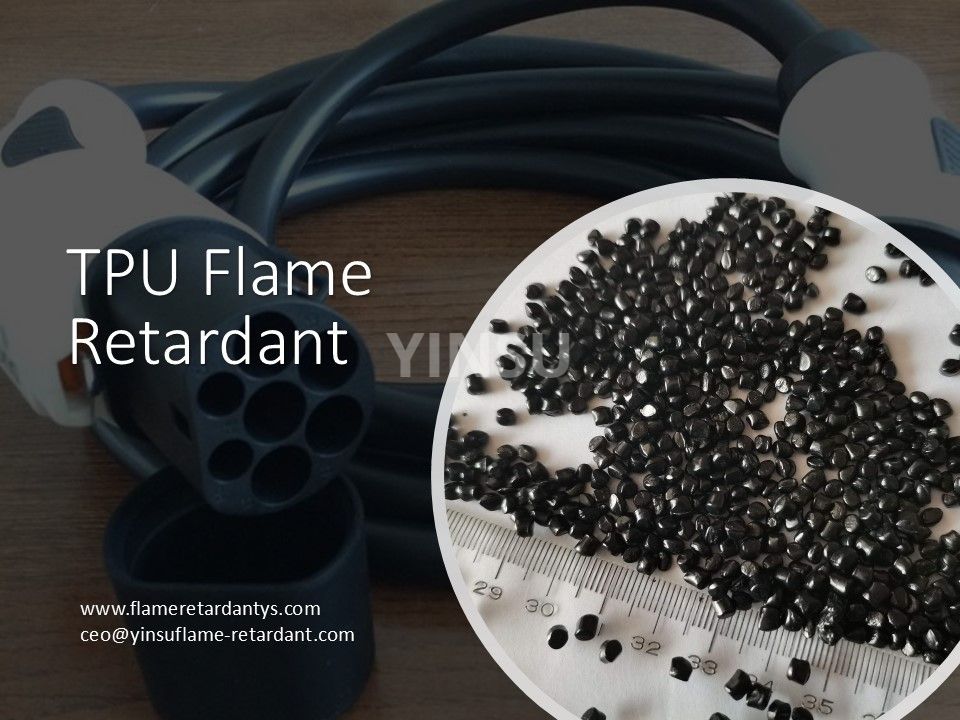
Dark-Colored/Black Applications: A red phosphorus + inorganic compounding matrix offers excellent cost performance with minimal color interference.
Yinsu's Targeted Product Solutions
At Yinsu Flame Retardant, our product portfolio addresses these distinct application pathways through two optimized systems:
TE-01 (The High-Efficiency Powder System): A surface-modified, phosphorus-nitrogen synergistic powder engineered with a high decomposition temperature ($$\ge 280^\circ\text{C$$) and a precise particle size ($$D_{50} \le 5\,\mu\text{m$$). It is ideal for high-end applications demanding strict V-0 ratings and robust mechanical property retention at a 25–40% loading level.
95-MC (The Cost-Effective Masterbatch System): A granular masterbatch that encapsulates a red phosphorus core with a nitrogen-based synergist. Reaching a V-0 rating at a 32–35% loading level, it reduces raw material costs by approximately 30% compared to conventional powder phosphorus-nitrogen systems. Furthermore, the masterbatch morphology inherently minimizes the risk of surface blooming.
In polymer compounding, there is no single "universal" solution; there is only the solution that best fits your specific application parameters, cost targets, and processing windows. Our technical recommendation is to first isolate your non-negotiable performance baseline, and then select your additive matrix to match it—never the other way around.


